The quick answer
The biggest electricity users are usually found by measuring whole-home consumption over time, then isolating circuits or individual appliances with a monitor or plug-in meter. Heating, cooling, water heating, refrigeration, and always-on electronics often dominate, but the ranking depends on climate, equipment, occupancy, and season; nameplate wattage alone cannot tell you average use.
Start with a week of whole-home readings and your last year of bills. That combination shows when electricity use rises and gives you a baseline for judging any appliance measurement. The appliance with the highest wattage is not necessarily the biggest monthly user; the biggest user is the one that consumes the most kilowatt-hours over a representative period, or costs the most under your rate plan.
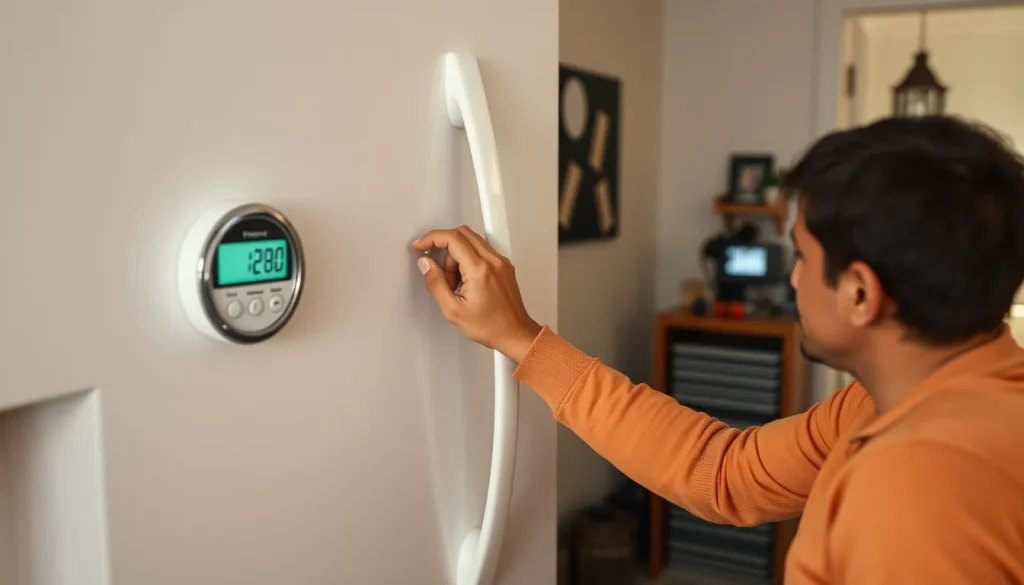
A whole-home energy monitor or utility app can show total use and timing. The Centre for Sustainable Energy notes that an energy monitor works alongside a smart meter and shows real-time electricity use, and that a standalone monitor without a smart meter will generally monitor electricity only. To name the largest appliances, combine whole-home data with plug-in meter readings or circuit-level monitoring.
What counts as the biggest user: power, energy, and cost
Power is the rate at which electricity is used or delivered, measured in watts (W) or kilowatts (kW). Energy is the amount used over time, measured in kilowatt-hours (kWh). A 1,500 W space heater draws more power than a 15 W router, but the router can use more energy over a month if it runs constantly while the heater runs only briefly. Cost follows energy, not power alone.
The basic calculation is energy_kWh = watts / 1000 × operating_hours_per_day × days and variable_cost = energy_kWh × price_per_kWh. Use watts for one appliance, hours per day for that appliance, and the number of days in the same period. Use your own marginal price per kWh for an estimate of extra usage, and remember that a complete bill also includes fixed charges, taxes, and any tier, demand, or time-of-use rules.
A practical sequence for finding the largest loads
1. Build a baseline from bills
Use at least 12 months of bills when available, but compare equivalent seasons. Record kWh and billing days, not just dollars. If rates or fees changed, a higher bill does not prove that your appliances used more electricity. Appropedia’s electrical audit guidance describes a home energy audit as a tally of appliance demand, often using a spreadsheet and an energy meter. That is the right model here: a simple table of loads, measurements, and periods.
2. Read the whole-home meter at consistent times
Read the meter or utility app at the same time each day for a week. Take a reading before bed and after waking to find overnight base load. If your utility provides 15-minute or hourly interval data, choose a period when no one is home or everyone is asleep. The lowest sustained demand is a clue to always-on loads. The NRDC’s idle-load guide notes that always-on devices may represent as much as one-third of a household’s total electricity consumption and groups them into electronics that draw power when not actively used, continuous infrastructure such as clocks and doorbells, and refrigeration.
3. Estimate the always-on base load
Base load is the electricity used when the house is quiet and major appliances are off. A stable overnight reading can reveal standby power, networking equipment, chargers, clocks, and appliances that cycle on their own. Do not switch off refrigerators, freezers, medical equipment, or network equipment you rely on for long periods just to test base load. Use short, labeled checks instead, and keep a note of what changed.
4. Isolate circuits or individual appliances
For 120 V plug loads, use a plug-in energy meter between the outlet and the appliance. Let the appliance run through a full cycle, or for 24 hours to a week if its use varies. For hardwired 240 V equipment such as central air conditioning, electric water heating, clothes dryers, or EV charging, do not use a plug-in meter; a qualified electrician should install circuit-level monitoring. If you use labeled breakers to identify circuits, switch only what is safe and avoid critical equipment.
5. Rank the results and verify
Normalize each measurement to the same period, such as 30 days, and rank by kWh first and by cost second. Then check whether the result matches the whole-home pattern. A plug-in reading for a refrigerator is strong evidence for that appliance, while a whole-home spike at the same time as a clothes-dryer cycle is only a clue until you confirm it. Use similar weather and occupancy when comparing before and after.
- Record the appliance or circuit name and location.
- Record the measurement method, start and end time, and number of days.
- Record measured kWh, then normalize to a 30-day month.
- Record your rate and the resulting variable cost.
- Note cycling, settings, season, and whether the load is essential.
Worked example: turning readings into a ranking
The following table is illustrative, not a survey of typical homes. It uses a hypothetical price of $0.16 per kWh, a 30-day month, and three simple inputs. The space heater calculation uses rated watts and an assumed runtime; the other two use hypothetical meter readings.
| Load | Basis | Monthly energy | Variable cost at $0.16 per kWh |
|---|---|---|---|
| Space heater, 1,500 W, 4 hours per day | Calculated: 1,500 / 1,000 × 4 × 30 | 180 kWh | $28.80 |
| Refrigerator, plug-in reading of 1.20 kWh per day | 1.20 × 30 | 36 kWh | $5.76 |
| TV and game console, idle reading of 0.30 kWh per day | 0.30 × 30 | 9 kWh | $1.44 |
| Selected loads only | 180 + 36 + 9 | 225 kWh | $36.00 |
The example shows why runtime and measurement matter. A high-wattage heater used four hours a day can rank above a refrigerator with a lower average draw, and a small always-on load can be visible without being dominant. Replace the illustrative inputs with your own meter readings and rate.
Where large loads usually hide
Common large loads include electric resistance heating, heat pumps, central air conditioning, electric water heating, refrigerators and freezers, clothes dryers, ovens and ranges, EV charging, pool pumps, and dehumidifiers. The ranking varies by climate, fuel type, house size, occupancy, and season. In a home with gas heating and gas water heating, the electric ranking may be led by air conditioning, refrigeration, laundry, or always-on equipment instead.
Lighting is visible but often smaller than expected: UAF Extension notes that American homes devote about 6 percent of their electrical budget to lighting. That does not make lighting unimportant, but a lighting-only audit may miss larger loads.
Always-on devices are easy to overlook because no one switches them on. The NRDC guide groups them into electronics that draw power when not actively used, continuous infrastructure such as thermostats, doorbells, phones, clocks, and recirculation pumps, and refrigeration. A base-load check is therefore part of finding the biggest users, not an optional extra.
Renter-friendly checks and structural changes
Renters can usually use utility data, a portable in-home display where supported, plug-in meters on 120 V appliances, and smart plugs with energy monitoring. Ask before attaching anything to the meter or electrical panel. Homeowners can add circuit-level monitoring, but a qualified electrician should install sensors inside the panel. Structural changes such as insulation, air sealing, duct repair, HVAC replacement, and water-heater changes require quotes and may need permits. Separate these from no-install actions so the cheapest checks come first.
Limitations and common mistakes
- Using nameplate watts as average use. Correction: measure kWh over a representative period. Consequence: you can overestimate a high-wattage appliance that runs briefly or underestimate a low-wattage appliance that runs constantly.
- Comparing dollar totals across rate changes or unequal billing days. Correction: compare kWh per day for similar seasons and separate usage charges from fixed fees.
- Measuring a cycling appliance for only a few minutes. Correction: cover a full cycle or 24 hours to a week if use varies.
- Assuming standby power is trivial. Correction: check base load; the NRDC guide notes that idle load can be as much as one-third of household electricity consumption.
- Opening the breaker panel or using a meter on 240 V circuits without training. Correction: use a qualified electrician. The safety consequence is serious.
U.S. billing context and the limits of a simple estimate
U.S. electricity rates, tiers, time-of-use periods, demand charges, and fixed fees vary by utility and state. A simple appliance estimate is not a full bill. If your rate changes by time of day, use the price during the hours the appliance runs, not the monthly average, to compare timing shifts. If you are checking a bill increase, compare equivalent billing days and weather before blaming an appliance.
Next step after you find the biggest user
Choose the two largest verified loads from your table and test one change for a week under similar weather and occupancy. Re-read the meter or plug-in meter, compare kWh, and keep the change only if it delivers the same service with less energy. That measured loop is more reliable than guessing from wattage labels.
FAQ
Can a smart meter tell me which appliance is running?
Whole-home smart-meter data shows total use and timing, not appliance labels. Some utility apps estimate disaggregated loads, but treat those estimates as clues. Confirm with a plug-in meter or circuit-level monitoring.
Should I rank appliances by watts or kilowatt-hours?
Rank by kilowatt-hours over a representative period for energy and cost, and use watts or kW separately for peak demand and circuit capacity. A high-wattage appliance used briefly may use less energy than a low-wattage appliance that runs constantly.
How long should I measure a refrigerator or HVAC system?
For a refrigerator, at least 24 hours in normal use is a reasonable start; a week is better if opening habits vary. For HVAC, use several days of interval data or thermostat runtime and compare similar weather days. Hardwired equipment needs a qualified installer for circuit-level monitoring.
What should renters do if they cannot access the panel?
Use utility usage data, a portable in-home display where supported, and plug-in meters on 120 V appliances. Ask the landlord before any meter or panel work. Focus first on plug loads and behavior changes you control.
Follow the evidence
Sources & references
- Centre for Sustainable Energy. Energy monitors. Reviewed August 2026. https://www.cse.org.uk/advice/energy-monitors/
- Appropedia. How to do an electrical energy audit (redirected from Home energy audit). No publication date shown. https://www.appropedia.org/Home_energy_audit
- University of Alaska Fairbanks Cooperative Extension Service. Home Electricity Audit, EEM-00254. No publication date shown. https://www.uaf.edu/ces/publications/database/energy/home-energy-audit.php
- Natural Resources Defense Council. Home Idle Load Self-Diagnosis and Action Guide (PDF). No publication date shown. https://www.nrdc.org/sites/default/files/home-idle-load-action-guide.pdf
Useful terms in this guide
- Idle load
- Electricity used by devices when they are not performing their main job, including standby and always-on equipment.
- Duty cycle
- The share of time a cycling appliance actually runs, such as a refrigerator compressor or HVAC system.
- Plug-in energy meter
- A device placed between a 120 V outlet and an appliance to measure volts, watts, and kWh over time.
- Circuit-level monitor
- Sensors installed in an electrical panel to measure individual circuits; installation should be done by a qualified electrician.
Have a question about these numbers?
Tell us what needs a closer look.