The quick answer
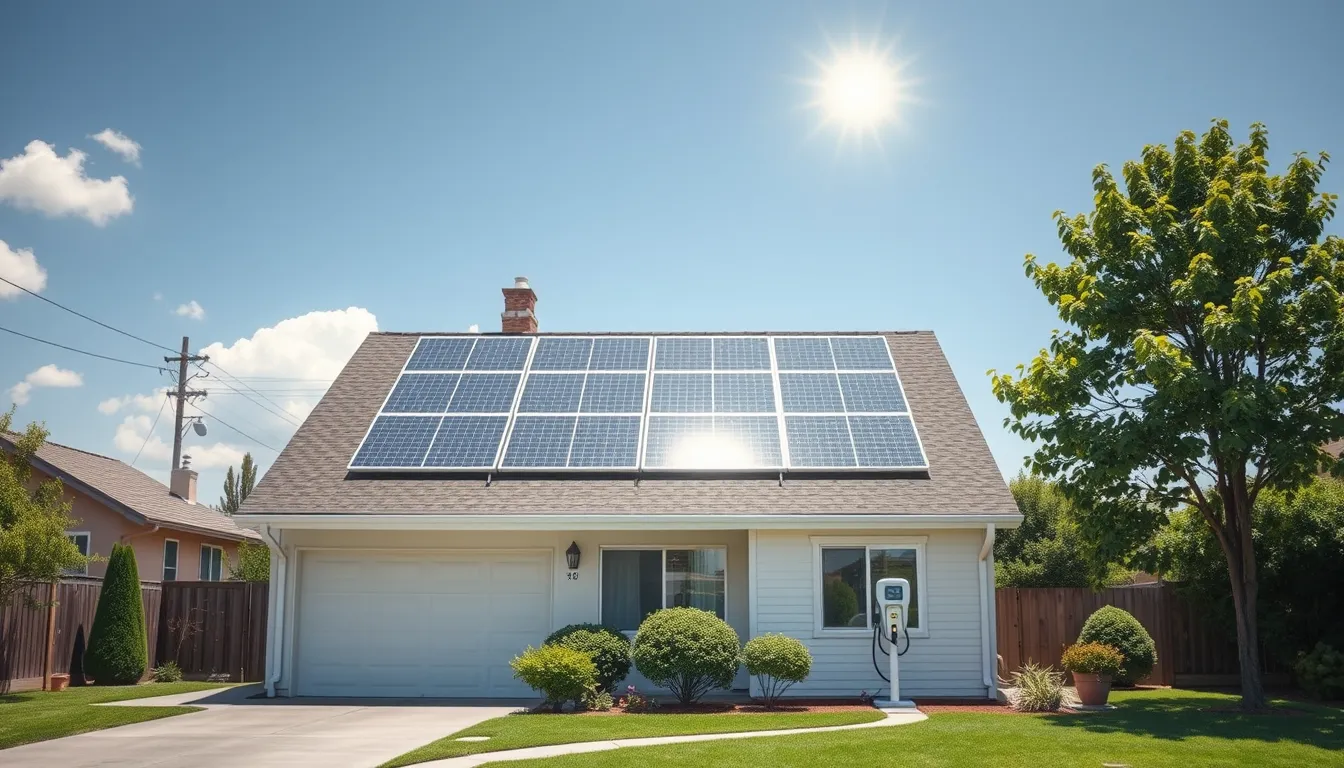
A typical 13 kWh-class home battery may run essential appliances for roughly a day, but there is no single runtime. Published estimates range from several hours to several days because essential loads, usable battery capacity, power output, startup surge, and losses vary. The reliable way to estimate your runtime is to divide usable battery kWh by your average essential load in kW.
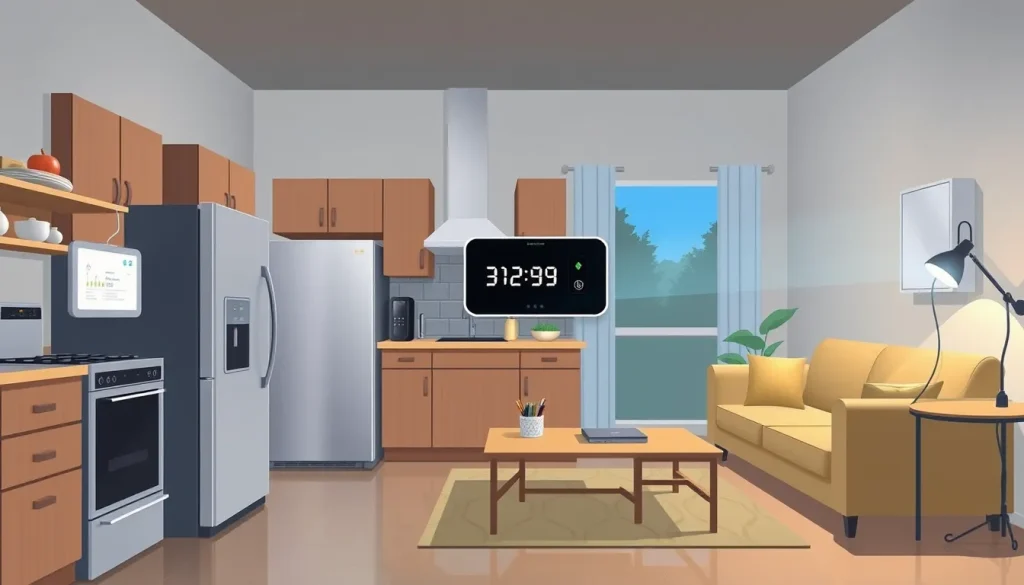
Battery runtime questions usually start with a shopping comparison: one battery has 10 kWh, another has 13.5 kWh, and a third claims whole-home backup. The number that matters for a reader asking about essential appliances is not the marketing label but the energy the battery can deliver to the backed-up circuits, divided by the average load those circuits draw. That is why two households with the same battery can see very different outage runtimes.
Start with the runtime equation, not a single number
A battery stores energy in kilowatt-hours (kWh). The load draws power in kilowatts (kW). Runtime is an energy-over-power calculation:
Runtime (hours) ≈ usable battery energy (kWh) ÷ average essential load (kW)
If you know daily energy use rather than an average load, the equivalent is:

Runtime (days) ≈ usable battery energy (kWh) ÷ essential energy use (kWh per day)
Usable energy means the portion of the battery that can actually serve backed-up loads after reserves and losses. Average load means the load averaged over the outage period, not the highest wattage printed on an appliance label. A 13.5 kWh battery powering a 0.5 kW average load gives about 27 hours before losses: 13.5 ÷ 0.5 = 27. A 1 kW average load cuts that to about 13.5 hours. Inverter losses, wiring losses, and a reserved state of charge reduce delivered runtime, so treat the formula as a planning estimate.
Published estimates vary widely, and the definitions explain why
EnergySage says a typical 13 kWh battery, in the size class of a Tesla Powerwall 3, can keep a refrigerator, lights, Wi-Fi, phone chargers, and a TV running for nearly a full day. Solar.com says a 10 kWh battery alone can power the critical electrical systems in an average house for at least 24 hours without air conditioning or electric heat, and longer with careful budgeting. SolutionEnergy estimates that one 13.5 kWh battery runs an average U.S. home for roughly 9 hours, or essentials only, such as a refrigerator, freezer, Wi-Fi, lights, and phones, for four to five days.
These figures are not contradictory arithmetic. They use different definitions of essential, different average loads, different assumptions about usable capacity, and different treatment of losses. The lesson for a buyer is to compare assumptions. When a claim says essentials, ask which appliances, how many hours per day, and whether heating, cooling, or pumps are included. EcoFlow’s buying guide lists usable capacity, the appliances kept running, startup surge, room temperature, and actual device run time as the main drivers.
What essential appliances usually includes
For one household, essentials may be a refrigerator, freezer, lights, Wi-Fi, phone charging, and a medical device. For another, essentials may include a well pump, sump pump, furnace blower, or air conditioning. Those choices change both energy use and starting power. A refrigerator or freezer cycles on and off; its nameplate wattage is not its average draw. A pump or compressor may draw a high surge for a short period when it starts. Keep continuous loads, cycling loads, and motor-starting loads in separate categories when estimating.
Worked example: a 13.5 kWh battery at three hypothetical loads
Assume, for arithmetic only, that 13.5 kWh is available to backed-up loads. This is not a promise for any product; check the manufacturer’s usable capacity. The table uses hypothetical average essential loads, not measured appliance data.
| Essential load profile | Average load (kW) | Energy per 24 hours (kWh) | Runtime before losses (hours) | Runtime with 10% losses (hours) |
|---|---|---|---|---|
| Very frugal: lights, Wi-Fi, phone charging, intermittent refrigerator | 0.15 | 3.6 | 90 | 81 |
| Moderate: adds regular TV use, freezer, and more frequent refrigeration | 0.35 | 8.4 | 38.6 | 34.7 |
| Heavier essentials: adds small pump, more lighting, or a larger entertainment load | 0.75 | 18.0 | 18.0 | 16.2 |
Read the table as a sensitivity test. At a very frugal 0.15 kW average, the battery lasts several days on paper. At 0.75 kW, still modest compared with whole-house central air, the estimate falls below one day. The 10% loss column is a planning adjustment, not a product specification.
For a whole-home comparison, SolutionEnergy estimates that one 13.5 kWh battery runs an average U.S. home for roughly 9 hours. A nine-hour runtime from 13.5 kWh implies an average load near 1.5 kW before losses: 13.5 ÷ 9 = 1.5. That illustrates why whole-home backup and essentials-only backup are different projects.
Energy capacity is not the same as power output
A battery has both a kWh rating and a kW rating. The kWh rating sets the theoretical duration; the kW rating sets how much can run at once. A battery with enough stored energy for a refrigerator, lights, and Wi-Fi may still fail to start a large well pump or air conditioner if its continuous or surge power rating is too low. EcoFlow’s guide highlights startup surge as a runtime and sizing issue. Before assuming an appliance can be backed up, compare its starting requirements with the battery’s published continuous and peak output, and have a qualified electrician review hard-wired loads and transfer equipment.
What shortens battery runtime during an outage
- Larger or longer-running loads. Every additional appliance and every extra hour of use draws down stored energy faster.
- Startup surge. Motors and compressors can demand brief bursts of power that are much higher than their running load.
- Temperature. EcoFlow notes that room temperature affects battery performance, so a battery in a very hot or cold location may not deliver its laboratory runtime.
- Losses and reserve. Inverter conversion and wiring losses reduce delivered energy, and some systems reserve capacity rather than running to zero.
- Battery age and state of charge. A battery that is not fully charged at the start of an outage has less energy available, and capacity can change over the battery’s life.
- No solar recharge. If the battery is paired with solar and designed for outage recharge, production can extend runtime. Without solar or another charger, runtime is limited to stored energy. Solar.com notes that pairing a battery with solar can provide backup for longer.
How to estimate runtime for your own essentials
- List the appliances you want backed up and separate plug-in loads from hard-wired loads.
- Measure plug-in appliances with a plug-in power meter when possible, or use a whole-home energy monitor for circuits it supports.
- Estimate daily kWh for each appliance. For a cycling appliance, use measured daily energy or estimate average watts multiplied by daily run hours, not nameplate watts multiplied by 24.
- Add the kWh per day for all essential loads, then divide by 24 to get the average essential load in kW.
- Divide usable battery kWh by average kW to estimate hours. Apply a loss and reserve margin, especially if the battery will not start fully charged.
- Check continuous and surge power ratings for every motor-driven load, including pumps, freezers, and air conditioning.
- Decide whether solar, a generator, or a larger battery is needed for your outage-length target.
Keep panel work, transfer switches, and hard-wired appliance connections with qualified professionals. EcoFlow’s guide includes a similar safety note for permanent electrical work, 240V circuits, and central air conditioning.
Common mistakes when comparing home batteries
- Using nameplate kWh as if all of it is usable. Check usable capacity and reserve assumptions.
- Treating an appliance label as average load. A refrigerator or pump can cycle and surge.
- Ignoring power output. A high-kWh battery may not start a large motor load if its kW rating is too low.
- Assuming one battery supports whole-house air conditioning because the kWh number looks large. Central air is a high-load appliance and needs a power-rating check.
What to do next
Before requesting quotes, write down the appliances you want backed up, estimate their daily kWh, and note any hard-wired loads that need surge power. Ask installers for a backup load calculation and a clear statement of usable battery capacity, continuous kW, peak kW, and whether solar can recharge the battery during an outage. That turns how long will it last into a number you can check rather than a marketing claim.
FAQ
Can a home battery run a refrigerator and freezer overnight?
Often yes, if the battery has enough usable kWh and can handle startup surge. A 13 kWh-class battery is cited by EnergySage as running a refrigerator, lights, Wi-Fi, phone chargers, and a TV for nearly a full day, but actual overnight runtime depends on appliance efficiency, temperature, and how often the compressor runs.
Why do estimates range from about 24 hours to four or five days for a similar-sized battery?
The estimates use different definitions of essentials and different average loads. EnergySage cites nearly a full day for a specific set of appliances, while SolutionEnergy estimates four to five days for a very restricted essentials-only load. Solar.com says a 10 kWh battery can power critical systems for at least 24 hours without air conditioning or electric heat. None of these is a universal runtime.
Can a home battery run central air conditioning?
Sometimes, if the battery's continuous and surge power ratings are sufficient and the system is designed for that load. Central air is a high-load appliance, and EcoFlow's guide highlights startup surge and load planning. Check the battery's published continuous and peak output and have a qualified professional review the electrical design.
How do I convert appliance watts into battery runtime?
Divide watts by 1,000 to get kW. For a steady load, multiply kW by hours per day to get daily kWh. Then divide usable battery kWh by average load kW, or by daily essential kWh for runtime in days. For cycling appliances, use daily energy rather than nameplate watts.
Follow the evidence
Sources & references
- EnergySage, Solar Batteries: Can I Power My House With Them?, updated September 24, 2025, https://www.energysage.com/energy-storage/how-much-of-my-house-can-i-run-on-a-battery-and-for-how-long/
- EcoFlow, Home Backup Battery: Outage Runtime & Buying Guide, dated April 29, 2026, https://www.ecoflow.com/ca/blog/how-long-home-backup-battery-last
- Solar.com, How Long Can Solar Battery Power a House During an Outage?, updated January 23, 2026, https://www.solar.com/learn/how-long-can-a-battery-provide-power-during-an-outage/
- SolutionEnergy, How Long Does a Home Battery Last?, https://solutionenergy.com/batteries/how-long/
Useful terms in this guide
- Kilowatt-hour (kWh)
- A unit of energy equal to one kilowatt used for one hour.
- Kilowatt (kW)
- A unit of power showing the rate at which energy is used or delivered.
- Usable capacity
- The portion of a battery's stored energy that can actually be delivered to backed-up loads after reserves and losses.
- Startup surge
- A brief high-power demand when a motor or compressor starts, which can be much higher than its running load.
Have a question about these numbers?
Tell us what needs a closer look.