The quick answer
Backup reserve and daily cycling are two separate battery goals. The reserve is energy held back for outages; daily cycling is the usable window above that floor used for solar self-consumption or time-of-use shifting. A reserve percentage alone is not enough: it must be sized from the critical load, outage duration, and the battery's usable capacity and power.
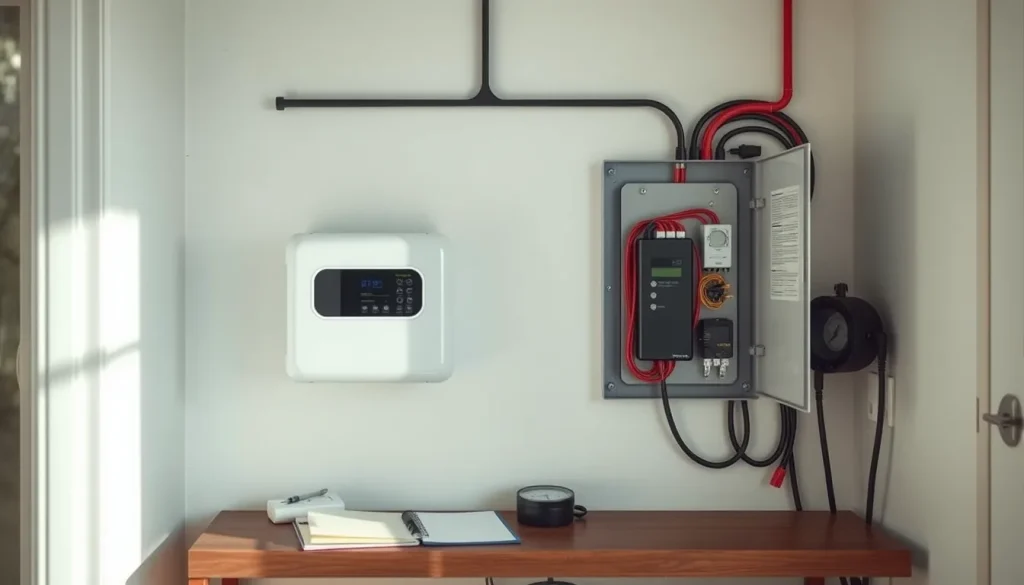
A home battery can be asked to do two jobs that look similar on a settings screen but serve different purposes. One job is to keep a block of energy in reserve for a grid outage. The other is to cycle energy every day — charging from solar or cheap off-peak power and discharging to the house when needed. The reserve is an insurance policy; daily cycling is an operating strategy. The two goals compete for the same stored energy.
Backup reserve is a floor, not a promise
Backup reserve is often set as a state-of-charge (SOC) floor. The battery stops discharging at that floor during normal operation so some energy remains for an outage. A reserve percentage is only the start. A useful reserve policy also needs a capacity basis (total versus usable kWh), a minimum discharge boundary, the supported-load profile, and the verified operating mode, as BoostESS notes in its explanation of backup reserve versus daily savings. Without those details, 30% on one system may not deliver the same outage runtime as 30% on another.
Anern describes the emergency reserve as a dedicated fuel tank that normal daily operation does not tap. That is a helpful image, but the size of the tank is not determined by the percentage alone. The relevant quantity is deliverable energy for the loads the owner intends to support, at the power those loads require. A 10 kWh battery with a 30% reserve has about 3 kWh of reserved energy before losses and operating limits; whether that lasts one hour or six hours depends on the backed-up load.
Daily cycling uses the capacity above the floor
Daily cycling is the usable window above the reserve floor. If a battery has 10 kWh of usable capacity and the reserve floor is set at 30%, the daily cycling window is about 7 kWh. That energy can support solar self-consumption, time-of-use shifting, or other dispatch goals. Raising the reserve shrinks this window. BatterystorageHQ makes the opportunity cost explicit: every point of reserve above what the outage record justifies is capacity paid for and never used in normal operation. An over-generous floor is invisible day to day because the system simply refuses to discharge past it, but it quietly removes usable capacity from daily cycling.

Daily cycling is not the same as using the whole battery. Manufacturers specify usable capacity and depth-of-discharge (DOD) limits, and DOD is closely linked to cycle life. Greentech Renewables explains that planned DOD affects battery lifespan and that designers may size a bank larger to avoid deep discharges. A reserve floor should therefore be set within the manufacturer’s operating limits, not treated as a substitute for proper DOD management.
How to size the reserve before setting the daily window
The reserve should be sized from two measured numbers: the critical load the battery must support and the outage duration the owner wants to cover. BatterystorageHQ recommends circuit-level energy monitoring rather than nameplate ratings, because a nameplate tells you what an appliance can draw at maximum, not what it draws on average. A practical sequence is:
- List the circuits that will actually be backed up. Include the refrigerator, freezer, lighting, internet, medical equipment, or other essential loads. Do not assume the whole panel is backed up.
- Measure or estimate the average power of those loads in kW. If measurement is not available, use a conservative estimate and label it as an assumption.
- Multiply average kW by the outage hours to get required energy in kWh. Add a buffer for startup surges, losses, and uncertainty.
- Compare that required energy with the battery’s usable capacity. Convert it to a reserve percentage only after confirming the capacity basis.
- Check the battery’s continuous and peak power ratings. Energy capacity does not guarantee that a large well pump, air conditioner, or electric resistance heater can start.
- Verify the system’s operating mode. A reserve setting may behave differently in backup-only, self-consumption, or time-of-use modes; the owner should confirm what the inverter actually does before the outage.
Illustrative example: a 10 kWh usable battery
Assume a household has a 10 kWh usable battery and wants to support 0.4 kW of average critical load for 10 hours. The required energy is 0.4 kW × 10 h = 4 kWh. Adding a 10% buffer gives 4.4 kWh. Dividing 4.4 kWh by 10 kWh usable capacity gives 44%, so the owner might set a 45% reserve floor. The daily cycling window would then be about 55%, or 5.5 kWh.
The arithmetic is simple; the assumptions are not. The 0.4 kW average hides cycling loads such as a refrigerator compressor. The 10 kWh figure must be usable capacity, not a marketing number that includes unusable reserve. The battery’s power rating must exceed the simultaneous load. And round-trip losses mean the house may receive less than the stored energy. The result is a planning estimate, not a guaranteed runtime.
| Reserve floor | Energy held for backup | Daily cycling energy | Covers a 4 kWh outage need? |
|---|---|---|---|
| 20% | 2 kWh | 8 kWh | No, before losses and limits |
| 40% | 4 kWh | 6 kWh | Barely; add a buffer |
| 60% | 6 kWh | 4 kWh | Yes, with margin |
The table is illustrative only. It excludes round-trip efficiency, temperature effects, manufacturer reserve limits, and power output. Its purpose is to show the tradeoff: a higher reserve can improve outage coverage while reducing the energy available for daily cycling.
What the tradeoff means for bill savings
Daily cycling can create value by shifting solar or cheap grid energy to periods when the house would otherwise buy expensive electricity. But the value depends on the tariff, the battery’s round-trip efficiency, the eligible modes, and whether exports are compensated. A simple gross calculation can show the scale: 5.5 kWh cycled per day at an avoided energy charge of $0.20/kWh is $1.10 per day, or $33 over a 30-day month. That is not a bill savings guarantee. It excludes fixed charges, losses, demand charges, and any change in tariff; it also assumes the energy would otherwise be bought at that rate.
The reserve side is harder to value in dollars because it is avoided outage cost, not a monthly credit. The owner should decide how much resilience is worth before optimizing daily cycling. A reserve sized for a short, common outage is different from one sized for a multi-day event. The source material is consistent on this point: reserve should be based on measured critical loads and actual outage duration, not a round number that felt safe.
Common mistakes when setting backup reserve and daily cycling
- Using total home usage as the critical load. A backup reserve is sized for backed-up circuits, not the whole house. Measure the essential loads separately.
- Treating SOC percentage as kWh. A 30% reserve on a 5 kWh usable battery is 1.5 kWh; on a 20 kWh usable battery it is 6 kWh. The percentage alone does not state the energy held.
- Ignoring power output. A battery with enough kWh may still fail to start a large load. Check continuous and peak power and the backed-up panel.
- Setting a reserve that is too high by default. BatterystorageHQ warns that an over-generous floor silently removes usable capacity every day. Justify each reserve point with load and duration.
- Assuming the reserve is active in every mode. Verify the operating mode and what the system does before the battery reaches the requested reserve.
Decision rule and next step
The practical order is: define the outage you want to ride through, measure the critical load, calculate the required energy, confirm the battery’s usable capacity and power, set the reserve floor, and let daily cycling use the remaining window within the manufacturer’s limits. For renters or households with a third-party-owned battery, the next step is to ask the property manager or system owner which circuits are backed up and what reserve policy is programmed. For owners, the next step is to collect one week of circuit-level data for the intended backup loads, then compare that measured energy with the battery’s usable capacity. A reserve that is sized from evidence is easier to defend than a percentage chosen by habit.
FAQ
Should I set my home battery reserve to 20%?
There is no universal reserve percentage. A 20% floor on one battery may hold more or less energy than 20% on another, and runtime depends on the backed-up load, outage duration, usable capacity, power output, and operating mode. Reserve should be sized from those inputs rather than selected by habit.
Does a higher backup reserve make the battery last longer?
Not automatically. Depth of discharge is linked to cycle life and should stay within manufacturer limits, but a backup reserve is primarily a reliability setting. A reserve that is higher than needed can reduce daily cycling without a proven longevity benefit.
Can daily cycling use energy below the reserve floor?
Normally no when the reserve floor is active. The system stops normal discharge at the floor so energy remains for backup. Owners should verify the operating mode because behavior can differ between backup-only, self-consumption, and time-of-use settings.
Is battery energy capacity enough to back up an air conditioner?
Not by itself. An air conditioner may need high startup power and sustained running power, so the battery’s continuous and peak power ratings matter as much as kWh capacity. The backed-up circuits and equipment startup requirements should be checked by a qualified professional.
Follow the evidence
Sources & references
- BoostESS. Backup Reserve vs Daily Savings: Set a BESS SOC Policy. October 13, 2026. https://boostess.energy/blog/backup-reserve-vs-daily-savings-set-a-bess-soc-policy/
- Anern. Q&A: What Daily SOC Window Should I Use for Emergency Reserve? Updated April 24, 2026. https://www.anernstore.com/blogs/diy-solar-guides/qa-daily-soc-emergency-reserve
- Greentech Renewables. How does Depth of Discharge factor into Grid Connected battery systems? https://www.greentechrenewables.com/article/how-does-depth-discharge-factor-grid-connected-battery-systems
- BatterystorageHQ. Reserve SoC vs Self-Consumption: Setting the Floor. August 18, 2026. https://batterystoragehq.com/reserve-soc-vs-self-consumption/
Useful terms in this guide
- State of Charge (SOC)
- The percentage of battery capacity currently stored, which must be read against either total or usable capacity.
- Usable capacity
- The energy a battery can deliver within manufacturer limits, excluding reserved or otherwise unusable portions.
- Depth of Discharge (DOD)
- The share of battery capacity that is discharged; manufacturers link it to cycle life and operating limits.
- Critical load
- The backed-up appliances and circuits a battery is intended to support during an outage.
Have a question about these numbers?
Tell us what needs a closer look.