The quick answer
Home solar can lower bills and add resilience, but the value depends on site-specific production, how much solar the home uses, export compensation, installed cost, and financing. A credible decision compares annual kWh and self-consumption against a stated bill baseline, not just panel price or advertised savings. For many households, the next step is gathering 12 months of usage and several itemized quotes.

Home solar is less a single product than a long-term contract with the weather, your roof, your utility, and your future electricity use. The useful question is not whether solar is good in general, but whether a specific array, at a specific installed price, under specific billing rules, will meet a household’s goals: lower bills, cleaner electricity, backup power, or some combination. That question has three layers: how much electricity the system can produce, how much of that production the home can use or sell, and what the installed system costs after incentives and financing. This guide explains those layers, shows a worked example with visible assumptions, and turns them into a quote-comparison checklist.
Why solar decisions are site-specific
Two houses on the same street can receive very different solar proposals because the roof, shade, electric panel, utility tariff, and household schedule all differ. The U.S. Department of Energy’s homeowner guide notes that solar panels are built to work in all climates, but rooftops may not be suitable because of age or tree cover, and excessive shade can make rooftop panels a less ideal option. The size, shape, and slope of a roof also affect the layout and production of a system.
Consumer Reports notes that roughly 6 million U.S. households now have solar panels, according to the Solar Energy Industries Association, and that the math on solar has changed even though it can still be a good investment, particularly where electric rates are high and the owner plans to stay in the home for the long term. That is a useful framing: solar is not automatically a short-term money-maker. It is a capital purchase whose bill value accumulates over years, and whose result depends on assumptions that should be visible before signing.
A homeowner’s guide to going solar from Zillow also warns that aggressive advertising and predatory practices exist, including official-sounding names that exploit government programs. That warning matters because solar is sold through many channels, including door-to-door sales, financing packages, and lease or power purchase agreements. The technology may be sound while a particular contract, production estimate, or financing structure is not.
Essential concepts: power, energy, and bill value
Power and energy are not the same
A solar panel’s rated watts describe power under standardized test conditions, not the energy it will deliver every hour. Power is measured in watts (W) or kilowatts (kW). Energy is measured in watt-hours (Wh) or kilowatt-hours (kWh). A 400 W panel is not a 400 kWh panel. If an illustrative 400 W panel operated at its rated power for five hours, it would produce 0.4 kW times 5 hours, or 2 kWh. Real output would be lower because sunlight varies, panels heat up, shade falls on them, and inverters lose some energy.
The basic relationship is:
energy in kWh = power in kW × operating hours × a performance adjustment
For solar, the operating hours are often expressed as peak sun hours, which are not the same as daylight hours. A location that receives five peak sun hours in a day has received an amount of solar energy equivalent to five hours of standard high-intensity sun, even if the sun is up for far longer. A performance ratio, such as 0.75 to 0.85 in an illustrative estimate, accounts for temperature, soiling, wiring, inverter, and other losses. Actual values require a site-specific model.
How grid-connected solar serves a home
Most home solar systems are grid-connected. Panels produce direct current (DC) electricity, an inverter converts it to alternating current (AC), and the home’s electrical panel sends that power to lights, appliances, and other loads. When solar production exceeds the home’s immediate use, the excess can flow to the utility grid if the interconnection and tariff allow it. At night or on cloudy days, the home imports electricity from the grid as usual.
Unless the system includes a battery or an outage-capable inverter, a standard grid-tied solar system does not keep the lights on during a utility outage. Anti-islanding safety rules require most grid-tied inverters to shut down when the grid is down so they do not energize lines that utility workers may be repairing. That is why backup claims should be treated as separate from solar production claims.
Production, self-consumption, and exports
Annual production is only the beginning. Bill value depends on self-consumption, meaning the share of solar electricity used on site instead of exported, and on export compensation, meaning what the utility pays or credits for electricity sent to the grid. A simple annual bill relationship is:
annual bill offset ≈ self-used solar kWh × avoided retail rate + exported solar kWh × export credit per kWh
Fixed monthly charges, taxes, and other fees may remain even if solar production is large. Time-of-use rates can also matter: solar often produces most strongly in midday, while a household may use more electricity in the evening. If exports receive a low credit and evening imports are expensive, a battery or load shifting may change the economics, but the battery’s cost must be included.
Net metering is a billing arrangement in which exported electricity may offset imported electricity under rules set by the utility or state. Net metering is not universal, and its terms can change. Some households receive a credit close to the retail rate; others receive a lower avoided-cost rate or no export compensation. A proposal that assumes generous export credits without confirming the current utility tariff is not a reliable savings estimate.
Storage and backup terms
A battery’s energy capacity is measured in kWh, while its power rating is measured in kW. The nameplate capacity is the total energy the battery can store under specified conditions; usable capacity is the portion that can actually be drawn in normal operation. Round-trip efficiency losses mean that not all stored energy comes back out. A battery may also reserve some capacity for backup, which reduces the energy available for everyday bill management.
Backup runtime is not determined by annual solar production. An illustrative runtime estimate is:
backup hours ≈ usable battery kWh ÷ average backup load kW
If a battery has 10 kWh usable and a household tries to back up a 0.5 kW average load, the ideal arithmetic is 20 hours, but actual runtime will be shorter after efficiency losses, reserve limits, and surge loads such as a well pump or air conditioner. The inverter’s power rating may also limit which appliances can run at once.
How to estimate annual solar output
A practical planning formula is:
annual kWh ≈ array size in kW-DC × specific yield in kWh per kW-year
Specific yield bundles together location, orientation, tilt, shade, weather, and system losses. It is not a universal number. A proposal should state the assumed specific yield or show a production model with its inputs. For an illustrative example, an 8 kW-DC array with a specific yield of 1,400 kWh per kW-year would produce:
8 kW × 1,400 kWh per kW-year = 11,200 kWh per year
That 11,200 kWh is an annual estimate, not a promise for every year. Weather varies, panels degrade slowly, and trees grow. The figure also says nothing yet about bill savings, because savings depend on how much of that 11,200 kWh is used on site and how exports are compensated.
Daily estimates use a similar logic:
daily kWh ≈ array kW × peak sun hours × performance ratio
For an illustrative 6 kW array, five peak sun hours, and a performance ratio of 0.80, the daily estimate would be 6 × 5 × 0.80 = 24 kWh per day. Multiplying by 365 gives 8,760 kWh per year if every day were identical, which it is not. Seasonal variation can be large in many U.S. climates, so annual modeling is more useful than a single sunny-day calculation.
Factors that can reduce or change output include:
- Shade from trees, chimneys, adjacent buildings, or future construction.
- Roof orientation and tilt, plus whether panels can be mounted on a better-facing roof or ground structure.
- Local weather and seasonal sun angles.
- High panel temperatures, which reduce output below standard test conditions.
- Soiling from dust, pollen, or snow, and whether maintenance is practical.
- Inverter efficiency and any clipping when the array exceeds the inverter’s AC rating.
- Age-related degradation and equipment faults.
Sizing deserves separate attention. A system sized to 100 percent of annual kWh is not automatically the best financial choice. If the home uses little electricity during solar hours and exports are credited poorly, a smaller array or a battery may make more sense. If the home uses a lot of daytime air conditioning or has a favorable export tariff, a larger array may be reasonable. The right size depends on the goal, the tariff, and the budget, not on a sales slogan.
What determines installed cost
An installed solar price usually includes panels, one or more inverters, mounting and racking, wiring, safety disconnects, labor, permits, utility interconnection, inspection, and monitoring. It may also include a main electrical panel upgrade, roof repair, trenching for a ground mount, or removal and reinstallation if the roof is replaced later. A battery adds equipment, power electronics, and installation cost, and it may require a critical-load subpanel.
Comparing only the advertised dollars per watt can mislead. The dollars-per-watt figure may exclude a battery, roof work, or financing fees. It may be quoted before or after incentives. It may use a different panel or inverter class. A better comparison holds the scope and service level constant, then examines gross installed cost, net cost after confirmed incentives, annual production assumptions, warranty terms, and financing costs.
Consumer Reports notes that investment in solar increased after the 2022 Inflation Reduction Act offered a federal tax credit, and that new rules on costs, tax credits, financing, and savings apply for 2026 and 2027. Because tax and incentive rules can change, this guide does not treat any credit percentage or eligibility rule as current. Verify federal, state, local, and utility incentives with official sources and a tax professional before relying on them in a payback calculation.
Ownership and financing choices also change the decision:
- Cash purchase requires the most money upfront. The owner typically controls the equipment and any available incentives, but must verify tax rules and have the cash available.
- Solar loan spreads the cost over time. Compare the annual percentage rate, fees, term, lien terms, prepayment penalties, and whether the monthly payment continues after the system is paid off. A tax credit should not be assumed to arrive in time to reduce the first loan payment unless the lender explicitly structures it that way.
- Lease or power purchase agreement usually means a third party owns the system and the homeowner pays for use of the equipment or the electricity. Read how the agreement transfers if the home is sold, how the payment escalates, who receives incentives, and who is responsible for maintenance and removal.
None of these structures is universally best. The right choice depends on available capital, tax situation, expected tenure in the home, contract terms, and the homeowner’s tolerance for maintaining equipment.
Worked example: from production to bill offset and simple payback
The following example is illustrative. It does not describe current market prices or a typical household. It exists to show the arithmetic and the assumptions a reader should demand in a proposal.
Illustrative assumptions:
- 8 kW-DC array with estimated production of 11,200 kWh per year.
- Household electricity use of 10,800 kWh per year.
- 45 percent of solar production is self-consumed; 55 percent is exported.
- Avoided retail rate of $0.18 per kWh for self-used solar.
- Export credit of $0.07 per kWh for exported solar.
- Gross installed cost of $24,000 before incentives, or an illustrative $3.00 per watt.
- A hypothetical $6,000 incentive or credit, leaving a net cost of $18,000.
- No battery, no financing, no rate escalation, no degradation, no fixed-charge changes, and no replacement costs.
Step 1: split production into self-used and exported kWh.
self-used kWh = 11,200 × 0.45 = 5,040 kWh
exported kWh = 11,200 × 0.55 = 6,160 kWh
Step 2: value self-used electricity at the avoided retail rate.
5,040 kWh × $0.18 per kWh = $907.20
Step 3: value exports at the export credit.
6,160 kWh × $0.07 per kWh = $431.20
Step 4: add the two bill offsets.
$907.20 + $431.20 = $1,338.40 per year
Step 5: calculate simple payback on the net cost.
$18,000 ÷ $1,338.40 per year ≈ 13.4 years
The result is a simple payback of about 13.4 years under those assumptions. If the utility offered no export credit, the annual offset would fall to $907.20 and simple payback would stretch to about 19.8 years. If self-consumption rose to 70 percent, annual offset would rise to about $1,646.40 and simple payback would shorten to about 10.9 years, but that higher self-consumption might require a battery or deliberate load shifting whose cost is not included here.
| Scenario | Self-consumption share | Self-used kWh | Exported kWh | Avoided imports at $0.18 per kWh | Export credit at $0.07 per kWh | Annual bill offset | Simple payback on $18,000 net cost |
|---|---|---|---|---|---|---|---|
| Low self-consumption | 30% | 3,360 | 7,840 | $604.80 | $548.80 | $1,153.60 | 15.6 years |
| Base case | 45% | 5,040 | 6,160 | $907.20 | $431.20 | $1,338.40 | 13.4 years |
| High self-consumption | 70% | 7,840 | 3,360 | $1,411.20 | $235.20 | $1,646.40 | 10.9 years |
The table establishes a narrow point: when export compensation is lower than the retail rate, shifting more solar use into the home raises bill value. It does not establish that a battery is worthwhile, because the table excludes battery cost. It also does not establish a complete financial return, because it omits fixed charges, taxes, rate changes, degradation, maintenance, inverter replacement, financing, and the time value of money. The household’s actual bill baseline and utility tariff are essential.
How to read and compare solar quotes
Information to gather before requesting quotes
A useful quote starts with a useful baseline. Gather 12 months of electric bills, not just one high summer bill. Note annual kWh, monthly variation, the retail rate, fixed charges, time-of-use periods, and any demand charges that apply. Read the utility’s current rules for solar interconnection, net metering, and export compensation. Check the roof’s age and material, and note shade from the ground at several times of day. Decide how long you expect to stay in the home and whether your goal is bill savings, backup, environmental value, or a combination.
Also identify electrical constraints. An older panel may not have capacity for solar, or may need an upgrade. A roof that is near the end of its life may need replacement before or alongside solar to avoid paying to remove and reinstall panels later. These are professional checks, not do-it-yourself determinations.
What a complete proposal should show
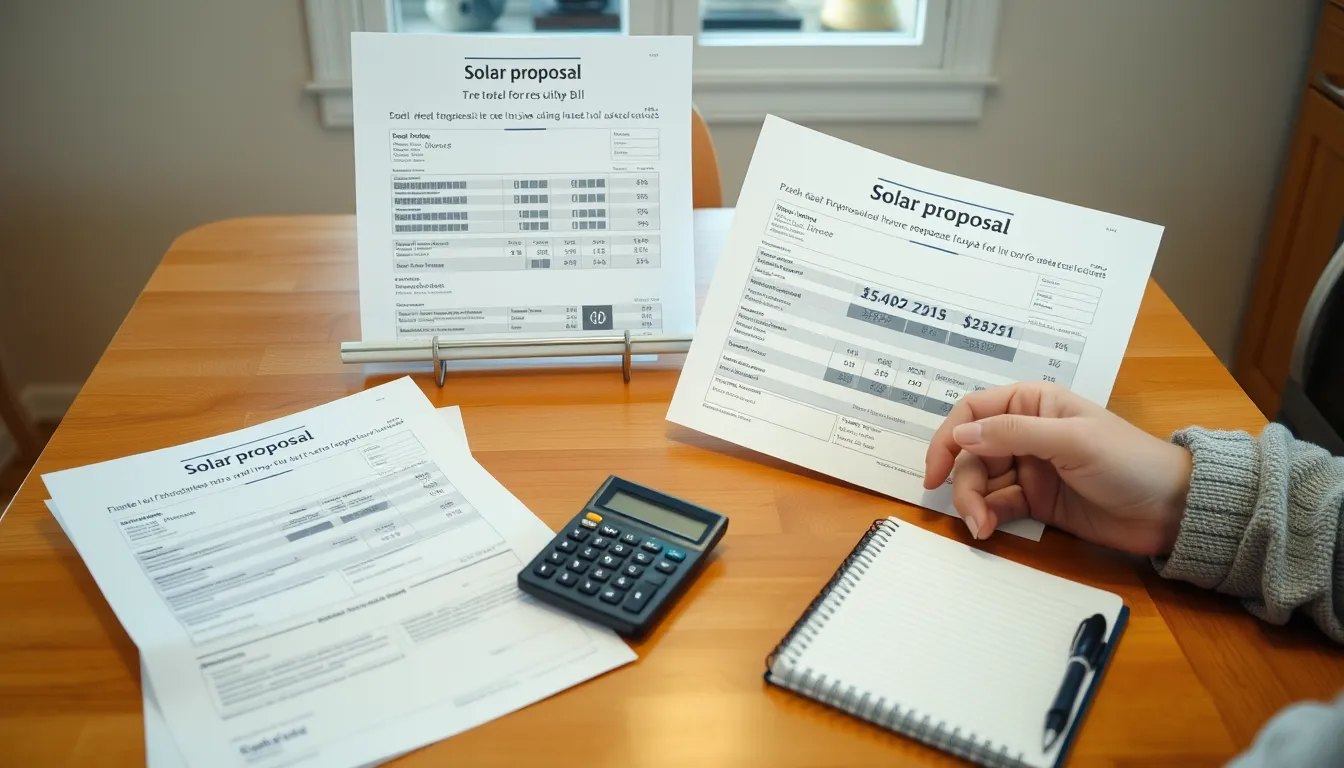
A credible proposal should separate facts from estimates. Look for:
- System size in kW-DC and inverter size in kW-AC, with make and model numbers.
- Panel quantity, wattage, and warranty terms.
- Annual production estimate with the modeling assumptions, including shade and weather data.
- Mounting method, roof penetrations, and workmanship warranty.
- Permitting, inspection, utility interconnection, and monitoring responsibilities.
- Gross price, itemized adders, and the incentives assumed in any net price.
- Financing terms, including APR, fees, term, liens, and prepayment rules.
- Battery usable kWh, power rating, backup loads, and warranty if storage is included.
- Exclusions, change-order rules, and expected schedule.
A production estimate should be labeled as an estimate. Ask whether it represents an average weather year or a single year, and whether the installer offers any production guarantee. A guarantee is only as good as the company backing it and the contract terms.
Questions to ask each installer
- What annual production do you model, and what specific yield or performance ratio does that imply?
- How did you account for shade, roof orientation, tilt, and future tree growth?
- How does my utility compensate exports, and what happens if those rules change?
- Which equipment warranties, workmanship warranties, and production guarantees transfer if I sell the home?
- Who handles permits, interconnection, inspection, and any utility delays?
- What roof or electrical work is excluded, and who pays if the roof needs repair?
- Does the financing create a lien or other encumbrance on the home?
- Are incentives subtracted from the price or merely assumed in a sales calculation?
- What is the expected annual degradation, and how is it documented?
- What happens if production is materially below the estimate?
Zillow’s guide warns about aggressive and misleading advertising, including official-sounding programs that may exploit government incentives. Practical defenses are simple: do not sign on the first visit, do not treat a tax credit as an instant discount unless the contract says so, and do not accept a savings figure that cannot be traced to production, rate, and export assumptions. Verify licenses, insurance, complaint history, and permit records with the relevant state or local authority.
Batteries and backup: separate value from savings
A battery can store excess solar for evening use, shift grid imports away from expensive time-of-use periods, or provide backup power to selected circuits. Those are different services, and they should be valued separately. A battery that increases self-consumption may reduce imports and improve bill offset, but its installed cost can exceed the bill savings. A battery purchased mainly for outage resilience may be justified by peace of mind or medical needs even if simple payback is long or undefined.
When comparing batteries, ask for usable kWh, continuous power in kW, surge capability, round-trip efficiency, chemistry and safety certification, warranty throughput, and the list of backed-up circuits. A whole-home backup claim requires enough power and energy to start and run the largest loads. A critical-load panel may be more realistic and less expensive, but it will not run everything in the house.
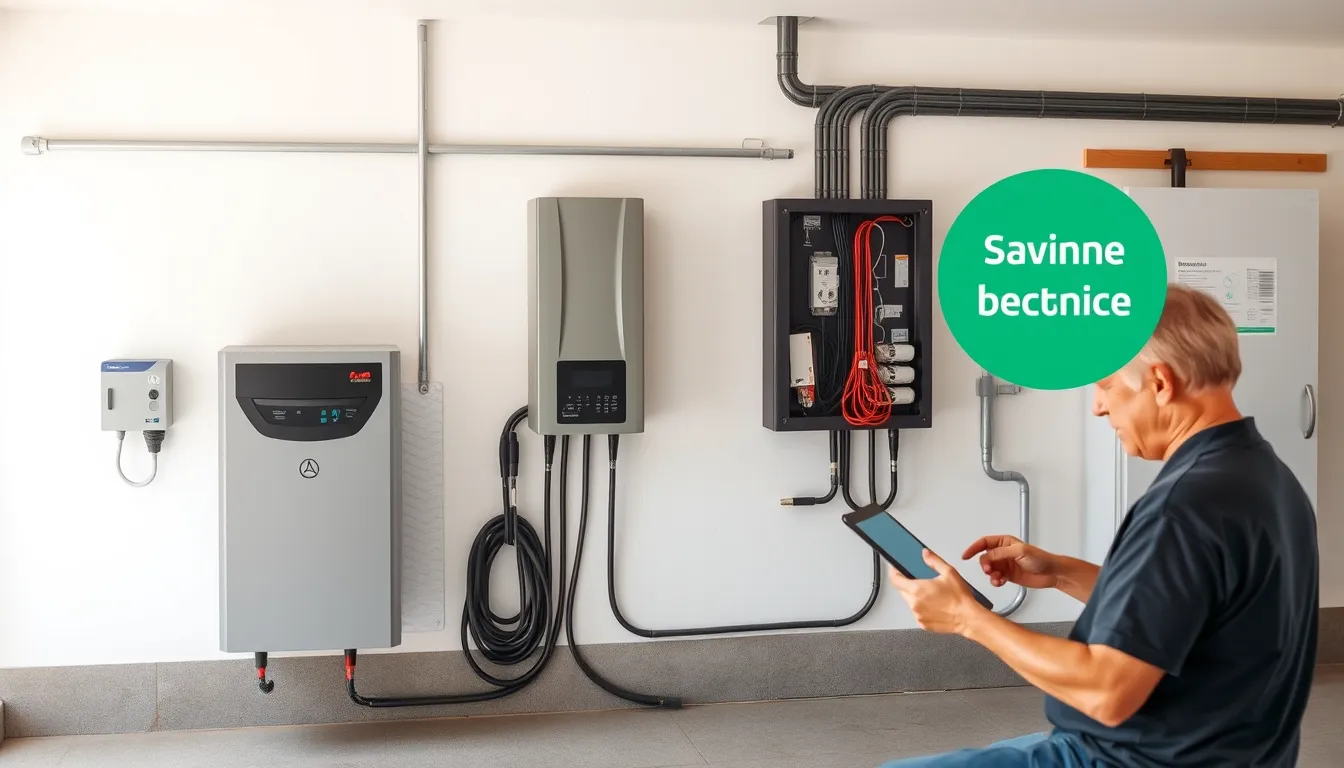
Battery installation involves high-voltage DC or AC equipment and must be done by qualified professionals under applicable electrical codes and permits. Keep the decision at the level of scope, contract, and verification rather than attempting electrical work yourself.
Utility rules, rates, and incentives
Solar economics sit on top of a utility bill that is rarely a single flat rate. Fixed customer charges may remain regardless of solar production. Volumetric charges apply to imported kWh. Time-of-use rates set different prices by hour. Some tariffs include demand charges based on peak power, though these are more common in commercial service than typical residential service. Export compensation may be a net-metering credit, a lower avoided-cost payment, or a time-varying export rate.
Because these rules vary by utility and can change, a solar quote should state the tariff and export assumption it uses. Consumer Reports notes that the rules on costs, tax credits, financing, and savings have changed for 2026 and 2027. That is a reason to check the current federal tax credit rules, state and local incentives, and utility program documents directly. It is not a reason to rely on an old advertisement or a salesperson’s summary.
Incentives can affect affordability and payback, but they should be modeled conservatively. If a tax credit is nonrefundable, a household with little tax liability may not receive its full value. If a rebate is capped or reserved for a certain equipment class, the quote should show eligibility. If a utility program has a waitlist or a capacity limit, the project schedule should not assume instant approval.
Renters and households that cannot modify the roof
Renters usually cannot make major rooftop modifications without the property owner’s consent, and even then the ownership of the system and incentives can be complicated. A renter’s practical solar-related steps are different: reduce unnecessary electricity use, understand the rate structure, ask the landlord about efficiency upgrades, and investigate community solar or other off-site options where state and utility rules allow them. Availability and terms vary, so verify with the utility or state energy office rather than assuming a program exists.
For homeowners with a shaded roof, an old roof, or a multifamily building, rooftop solar may not be the first upgrade. Air sealing, insulation, efficient lighting, and appliance replacement can lower the load that any future solar system would need to serve. Efficiency first is not a slogan; it reduces the size and cost of the solar decision.
Common mistakes and uncertainty
- Treating production as savings. A system can produce many kWh and still deliver modest bill savings if most production is exported at a low credit.
- Comparing total price without comparing scope. A lower quote may exclude a panel upgrade, permit, battery, or roof work.
- Using an old incentive rule. Tax credits and utility programs change; confirm current eligibility.
- Ignoring fixed charges. Solar may reduce volumetric imports while fixed monthly charges remain.
- Oversizing under a poor export tariff. Extra production with little compensation can lengthen payback.
- Estimating battery runtime from annual production. Runtime depends on usable battery kWh, power rating, backed-up loads, and efficiency.
- Forgetting roof age. Removing and reinstalling panels can erase savings if the roof must be replaced soon.
- Assuming a move is far off. A long simple payback is harder to recover if the home is sold early, unless the contract and market support a transfer.
- Accepting a savings guarantee without contract terms. Ask who backs the guarantee and how a shortfall is measured.
Uncertainty is unavoidable. Weather varies, rates change, equipment can fail, and policy can shift. A disciplined estimate uses conservative production, realistic self-consumption, the current utility tariff, confirmed incentives, and a range of outcomes rather than one favorable number.
A practical next-step checklist
- Collect 12 months of bills. Record annual kWh, monthly variation, fixed charges, and the rate structure. This is inexpensive and essential.
- Read the utility’s solar and export rules. Confirm net metering, export compensation, interconnection fees, and any program caps.
- Inspect the roof from the ground. Note shade, roof age, and obvious obstructions. Leave structural and electrical assessments to qualified professionals.
- Make a rough production estimate. Use a conservative specific yield and the formulas above. Compare it with annual use, not just a sunny-day output claim.
- Set your goal and ownership preference. Decide whether you value bill savings, backup, environmental attributes, or all three, and whether you prefer cash, loan, lease, or power purchase agreement.
- Request several itemized proposals. Ask each bidder to show production assumptions, equipment, incentives, financing, warranties, and exclusions in writing.
- Normalize the numbers. Compare annual kWh, self-consumption, export credit, net cost, and simple payback under the same assumptions. Do not compare a cash price with a leased system’s monthly payment.
- Verify incentives and tax treatment. Use official program documents and a tax professional. Do not let a salesperson’s calculation substitute for eligibility rules.
- Arrange professional roof and electrical checks. These are paid or scheduled inspections, not guesses, and they can change the scope.
- Read the contract before signing. Confirm cancellation rights, lien terms, transfer rules, warranty assignments, and what happens if the installation is delayed.
A sensible next action is to start with the bill and the tariff, not the panel. If 12 months of usage, a conservative production estimate, and the current export rules produce a bill offset that fits your plans, itemized quotes are worth pursuing. If they do not, efficiency improvements, load shifting, or a community solar option may be the better next step.
FAQ
How many solar panels will I need?
There is no universal number. Estimate annual production by multiplying array kW by a site-specific specific yield, then compare that with annual kWh use and with how much solar the home can use on site. Roof space, shade, panel wattage, and export rules also constrain the answer.
Will solar eliminate my monthly electric bill?
Usually not entirely. Solar can reduce imported kWh, but fixed charges, taxes, nighttime use, and fees may remain. If exports receive a low credit, production can be high while bill savings are modest.
Do solar panels work in cloudy or cold climates?
The U.S. Department of Energy notes that solar panels are built to work in all climates. Output varies with weather and season, and excessive shade or an unsuitable roof can still make a particular site a poor fit.
Can I run my home during a power outage with solar?
Only if the system includes a battery or an outage-capable inverter designed for backup. Most standard grid-tied solar systems shut down during an outage for utility safety.
Should I choose cash, a loan, a lease, or a power purchase agreement?
Compare total cost, financing fees, contract length, who receives incentives, who owns and maintains the equipment, lien terms, and transfer rules if you sell the home. The best choice depends on your capital, tax situation, tenure, and goals.
How do I compare quotes when production estimates differ?
Ask each installer for annual kWh, the specific yield or model assumptions, self-consumption assumptions, export compensation, equipment details, net cost after confirmed incentives, and financing terms. Then compare the same scenario rather than headline price or claimed savings.
Follow the evidence
Sources & references
- U.S. Department of Energy, Homeowner's Guide to Solar, https://www.energy.gov/cmei/systems/homeowners-guide-solar (no publication date shown in supplied excerpt).
- Zillow, A Homeowner's Guide to Going Solar, https://www.zillow.com/learn/home-solar-primer/, March 4, 2026.
- Consumer Reports, Going Solar in 2026 and 2027: New Rules on Costs, Tax Credits, Financing, and Savings, https://www.consumerreports.org/home-garden/alternative-energy/key-questions-and-answers-about-going-solar-a1975262377/, updated October 15, 2026.
- Aurora Solar, Homeowner's Guide to Solar: Costs, Incentives, Storage & More, https://aurorasolar.com/home-solar/blog/solar-101/homeowner-guide-to-solar, updated September 2026.
Useful terms in this guide
- Kilowatt (kW)
- A measure of power, or the rate at which electricity is produced or used at a moment in time.
- Kilowatt-hour (kWh)
- A measure of energy equal to using one kilowatt for one hour; utility bills and solar production are usually measured in kWh.
- Specific yield
- The annual solar production per kilowatt of installed capacity, expressed in kWh per kW-year for a particular site and system design.
- Net metering
- A utility billing arrangement in which some or all exported solar electricity offsets imported electricity under rules set by the utility or state.
- Usable battery capacity
- The portion of a battery's stored energy that can actually be used in normal operation after reserves and efficiency limits.
Have a question about these numbers?
Tell us what needs a closer look.