The quick answer
Time-of-use electricity rates charge a different price per kilowatt-hour depending on when you use power, usually more during peak hours and less off-peak. They can lower a bill when a household can shift flexible use, but they can raise it when most usage stays in peak periods. The result depends on your utility's specific periods and prices, your hourly usage, and charges outside the TOU energy rate.
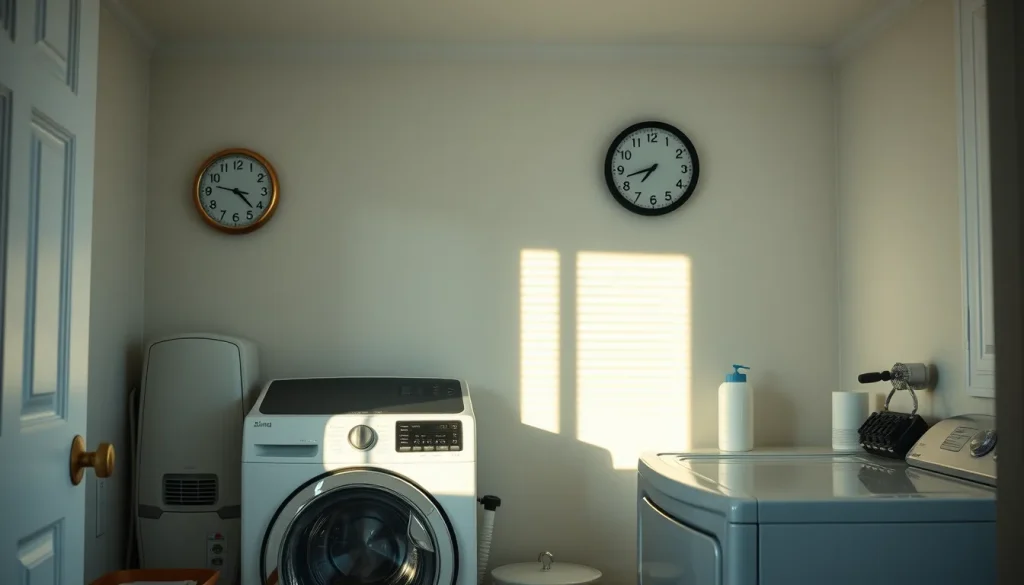
A time-of-use (TOU) electricity rate is still a price per kilowatt-hour, but the price is not fixed all day. It rises during designated peak periods and falls during off-peak periods. That design gives households a reason to move flexible electricity use—laundry, dishwashing, electric-vehicle charging, or timer-enabled appliances—away from the most expensive hours. The practical question is not whether TOU rates are good or bad in general. It is whether the hours when you can shift usage line up with the hours your utility prices lower.
What a time-of-use rate changes
Under a flat rate, each kWh costs the same no matter when it is used. Under a TOU rate, the meter still measures kWh, but the utility applies a different price to kWh used in each time period. A typical structure has a higher-priced peak period and a lower-priced off-peak period; some schedules add a mid-peak period or additional tiers for the highest or lowest demand hours (American Public Power Association, 2026; Ontario Energy Board).
The periods can also differ by season and by weekday versus weekend. The American Public Power Association notes that TOU rates may vary between weekdays and weekends or between seasons, and that peak hours are often weekdays in the late afternoon and early evening, while off-peak hours cover other times when use is lower. Those are common patterns, not a national standard. The exact hours, prices, holidays, and seasonal rules come from the individual utility’s tariff.
TOU is different from a demand charge. A TOU rate changes the price per kWh by time. A demand charge bills a separate amount based on the highest power draw, measured in kilowatts, during a billing period. Some commercial or specialty residential rates include both. For a typical household TOU plan, the main variable is when the kWh are used, not the single highest kW spike.
The price on the bill is a marginal price for that period. A household’s effective average rate is total bill divided by total kWh, so fixed fees and mixed-period use can make the average different from any single TOU price.
TOU rates are not universal. As of 2024, more than 620 utilities, including 230 public power utilities, offered a TOU rate (American Public Power Association). That means a reader may have a TOU option, a default TOU rate, or no TOU rate at all; the only reliable source is the utility.
How peak and off-peak periods are set
Utilities set TOU periods around the cost of serving load at different times. The American Public Power Association explains that higher electricity use is associated with higher costs to generate, transmit, and deliver power, so TOU rates aim to align the price customers see with those changing costs. The Colorado Public Utilities Commission puts the same idea in system terms: utilities must design their systems to meet peak demand even though less than 10% of electricity use occurs during the peak. Off-peak periods are when demand is lower and the grid is under less stress.
That does not mean every household’s peak is the utility’s peak. A household that runs a heat pump, charges an electric vehicle, or cooks dinner in the late afternoon may have a very different hourly profile from a neighbor who works nights. A TOU rate rewards the household that can move flexible load out of the utility’s peak. It can penalize the household whose necessary or preferred use stays in that window.
The Colorado commission also describes TOU rates as intended to be revenue neutral for the vast majority of consumers: a short window of higher on-peak rates is offset by lower off-peak rates. Revenue neutral is a statement about the rate design in aggregate, not a promise for each household. Two homes with the same monthly kWh can see different bills under the same TOU schedule if their timing differs.
Who tends to benefit, and who may pay more
A TOU rate is most likely to help when a household has flexible load that can move without reducing the service it receives. Examples include delaying laundry or dishwashing, scheduling an EV charge overnight, running a pool pump outside peak hours, or using a timer on a dehumidifier. A household that can shift a meaningful share of its monthly kWh from peak to off-peak has more room to offset the higher peak price.
A TOU rate may be a poor fit when most usage is fixed in the peak window. That can happen with evening cooking and entertainment, medical equipment, a home business with fixed hours, or a household that cannot or does not want to change routines. A small apartment with low flexible load may also have little opportunity to shift. The rate is not automatically cheaper; it is a different price signal.
- Good candidates: EV owners who can charge overnight, households with delay-start appliances, and people who are already home during off-peak hours.
- Weaker candidates: households with high evening use, limited off-peak flexibility, or no access to the utility’s TOU schedule or interval data.
- Renters: can often shift appliance use with timers and delay settings, but may not control the meter, the utility account, or structural equipment. Check the lease and utility enrollment rules before assuming a TOU rate applies.
Worked example: estimating the bill impact
The following example is illustrative, not a current price quote or a typical household’s usage. Suppose a household uses 900 kWh in a 30-day month. A flat comparison rate is $0.16/kWh. The TOU schedule has an on-peak rate of $0.28/kWh, a mid-peak rate of $0.18/kWh, and an off-peak rate of $0.12/kWh. Fixed fees, taxes, and surcharges are excluded so the comparison focuses on the energy charge.
| Scenario | On-peak kWh | Mid-peak kWh | Off-peak kWh | Monthly energy charge |
|---|---|---|---|---|
| Flat rate | n/a | n/a | n/a | 900 x $0.16 = $144.00 |
| TOU, no shift | 300 | 300 | 300 | (300 x $0.28) + (300 x $0.18) + (300 x $0.12) = $174.00 |
| TOU, 200 kWh shifted | 100 | 300 | 500 | (100 x $0.28) + (300 x $0.18) + (500 x $0.12) = $142.00 |
The no-shift TOU bill is $30 more than the flat comparison. The household then moves 200 kWh from on-peak to off-peak. The new bill is $142.00, which is $32 less than the no-shift TOU bill and $2 less than the flat comparison. The arithmetic is straightforward; the behavioral question is whether that 200 kWh shift is realistic each month.
The same method works with any schedule. For each period, use period kWh x period price per kWh, then add the period charges. If you want to estimate an appliance’s kWh first, use watts / 1000 x operating hours per day x days. Nameplate watts alone do not establish average consumption; cycling, season, and actual run time matter.
How to compare your own TOU offer
Start with the utility’s tariff sheet, not a marketing summary. The tariff should show the seasons, peak and off-peak windows, whether a mid-peak period exists, how weekends and holidays are treated, and whether the rate is optional or default. Then gather the usage data that matches those windows.
- Confirm the periods. Write down every season and every weekday/weekend difference. A schedule that is off-peak all weekend is not the same as one with a Saturday peak.
- List flexible load. Include EV charging, laundry, dishwasher, pool pump, dehumidifier, and any appliance with a delay-start or timer. Note which loads can move without reducing comfort or safety.
- Estimate kWh by period. Use interval data from the utility or smart meter if available. If not, estimate run time and wattage with the formula above.
- Compare equivalent bills. Use the same number of billing days and include fixed charges. A lower energy charge can be offset by a higher monthly service fee or by taxes.
- Check enrollment rules. Some utilities require a smart meter or a specific rate election. Ask whether you can switch back and whether a minimum term applies.
If the utility has no TOU option, the exercise still helps. A flat rate does not change the value of shifting load for other reasons, but it does remove the price difference between hours.
Practical ways to shift load without disrupting the household
Load shifting is not the same as using less electricity. It means moving the same or similar service to a cheaper hour. The most reliable shifts are usually the ones that are already automated or easy to delay.
- Use the delay-start setting on a dishwasher or washing machine, and run full loads rather than partial ones.
- Charge an EV overnight if the schedule makes overnight power cheaper; confirm the utility’s actual off-peak window first.
- Put a pool pump, dehumidifier, or other motor load on a timer only when the equipment is designed for it and the installation is safe.
- Pre-cool or pre-heat only when the building and equipment can do so without increasing total energy use or compromising comfort.
- For renters, use portable timers and appliance settings that do not require wiring changes or landlord approval.
Do not move essential medical equipment, heating, or cooling into an unsafe condition just to chase a lower rate. If a change requires electrical work, use a qualified professional.
Common mistakes to avoid
- Assuming all off-peak hours are equal. Some schedules have mid-peak or super-off-peak periods, and weekend rules can differ.
- Comparing a TOU bill with a flat bill from a different month. Weather and billing days change usage. Compare equivalent periods.
- Ignoring fixed charges. The TOU energy charge is only one line on the bill.
- Counting nameplate watts as average use. An appliance that cycles on and off uses less than its label suggests over a month.
What to do next
Request your utility’s TOU tariff sheet and, if available, 12 months of hourly or 15-minute usage data. Use the period-by-period arithmetic above to compare your current rate with the TOU rate over the same billing days. If you cannot shift enough flexible kWh to offset the higher peak price, a flat rate may fit better. If you can shift, test the change for a month or two before treating the TOU rate as a long-term saving.
FAQ
Does a time-of-use rate always save money?
No. It can lower bills for households that shift enough usage to lower-priced periods. If most usage stays on peak, the same household can pay more than under a flat rate. Compare your actual hourly use with the utility's schedule.
What hours are peak for TOU?
They vary by utility. A common pattern is weekday late afternoon and early evening, but some schedules add mid-peak periods, seasonal changes, or different weekend rules. Check your utility's tariff sheet.
Can renters use TOU rates?
Renters can benefit if they can shift flexible loads such as laundry, dishwashing, or EV charging. Check whether the utility account is in your name and whether the building has the required meter. Avoid making electrical changes without the owner's permission.
Is TOU the same as a demand charge?
No. A TOU rate changes the price per kWh by time. A demand charge bills a separate amount based on the highest power draw in a period. Some rates include both.
Follow the evidence
Sources & references
- American Public Power Association. Understanding Time-of-Use Rates. September 10, 2026. https://www.publicpower.org/periodical/article/understanding-time-use-rates
- Colorado Public Utilities Commission. Time of Use Rates. Accessed November 5, 2026. https://puc.colorado.gov/puc-home/energy/time-of-use-rates
- Ontario Energy Board. Managing costs with Time-of-Use rates. Accessed November 5, 2026. https://www.oeb.ca/consumer-information-and-protection/electricity-rates/managing-costs-time-use-rates
Useful terms in this guide
- Time-of-use rate
- An electricity rate in which the price per kWh depends on the time of day or week.
- Peak demand
- The highest level of electricity use on a system or in a home during a period; utilities plan capacity around system peaks.
- Off-peak
- A period of lower electricity demand and, under TOU rates, usually a lower price per kWh.
- Load shifting
- Moving flexible electricity use from peak to off-peak hours without reducing the service received.
Have a question about these numbers?
Tell us what needs a closer look.