The quick answer
A bill labeled monthly can cover a different number of days than the previous bill or the calendar month, so total kWh can rise or fall even when daily energy use is steady. Compare service periods and kWh per billed day first; use day-based proration only when a calendar-month estimate is needed.
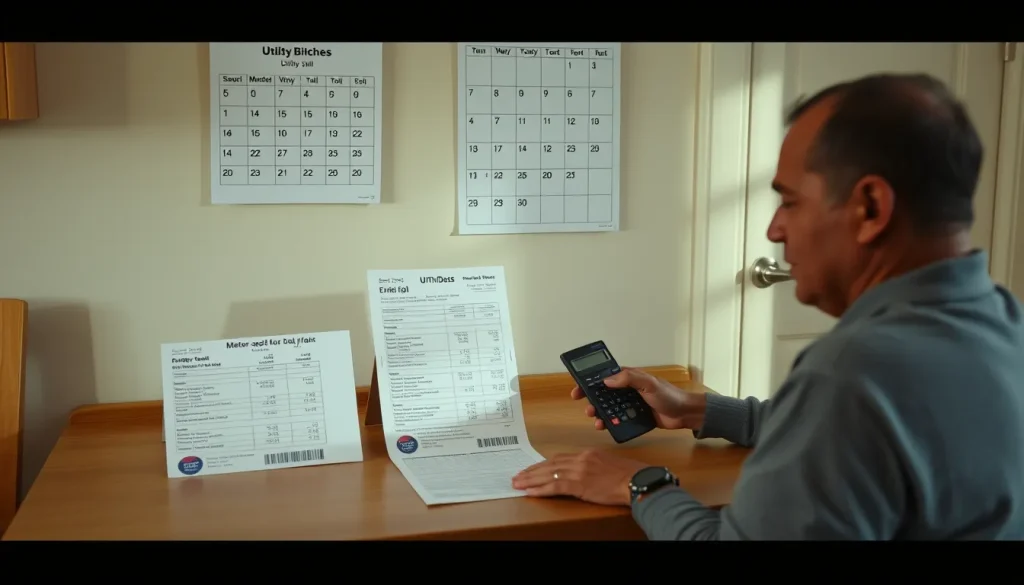
A bill labeled ‘monthly’ is not guaranteed to cover the same number of days as the previous bill or as the calendar month on your wall. That difference can make a household that used energy at the same daily rate appear to have used more or less energy. The practical fix is to compare service periods and daily use before comparing total kilowatt-hours or dollars.
Billing days are the days in the service period between meter reads, not the invoice date or payment due date. A utility bill can be issued in one month for a service period that began in the prior month, and a single period can cross a calendar-month boundary.
Why a ‘monthly’ bill can cover different numbers of days
A billing frequency describes how often a bill is issued. It does not fix the length of the service period. Meter-reading schedules, weekends, holidays, estimated reads, and route changes can all shift the start and end dates. For physical energy comparisons, service dates matter more than invoice issue dates or the month in which payment is due.
When a period spans two calendar months, the meter total belongs to the whole period, not neatly to one month. Reporting that usage by calendar month requires an allocation method. The common method is day-based proration, which divides the billed usage according to how many days of the period fall in each month.
First correction: compare kWh per day, not just total kWh
Total energy use is a quantity over time. A longer billing period can contain more days and therefore more kilowatt-hours even when daily use is unchanged. A shorter period can do the opposite. Before deciding that consumption rose or fell, normalize the billed energy to a daily average:
daily average kWh = billed kWh ÷ billed days
For example, if a bill covers 30 days and reports 900 kWh, the daily average is 900 ÷ 30 = 30 kWh per day. If another bill covers 35 days and reports 1,015 kWh, the daily average is 1,015 ÷ 35 = 29 kWh per day. The second bill is larger in total, but its daily rate is slightly lower. This is the screening step: divide each bill’s kWh by its number of billing days before comparing consumption.
The daily average is a comparison tool, not a diagnosis. It removes the obvious effect of period length, but it does not explain why daily use changed. Weather, occupancy, thermostat settings, appliance use, and building conditions can all change the daily rate.
Worked example: a higher total with lower daily use
The following numbers are hypothetical and are used only to show the arithmetic. They are not a typical household, a measured finding, or a current price.
| Bill | Billed days | Total kWh | Daily average (kWh/day) |
|---|---|---|---|
| A | 29 | 870 | 30.0 |
| B | 32 | 928 | 29.0 |
Bill B is 58 kWh higher in total: 928 − 870 = 58. As a share of Bill A, that is 58 ÷ 870 ≈ 6.7% higher. But Bill B covers 3 more days. Its daily average is 928 ÷ 32 = 29.0 kWh per day, compared with 870 ÷ 29 = 30.0 kWh per day for Bill A. Bill B’s daily use is about 3.3% lower: 1 ÷ 30 ≈ 3.3%.
If Bill A’s daily rate had continued for 32 days, expected use would be 30.0 × 32 = 960 kWh. Bill B’s 928 kWh is 32 kWh below that simple projection. The comparison does not prove that the household used less energy in a meaningful way, because weather and occupancy may differ. It does show why total kWh alone can mislead.
Second correction: proration for calendar-month reporting
Sometimes a daily average is not enough. A household may want to compare usage with a calendar-month weather report, a budget, or a utility program that reports monthly data. In that case, prorate the billing period by days:
monthly allocation = (days in that month within the billing period ÷ total billed days) × billed kWh
Use the same period for the numerator and denominator, and reconcile the parts back to the total. As an illustrative example, suppose a service period runs from January 15 through February 14, covers 31 days, and reports 930 kWh. Counting January 15 through January 31 gives 17 January days; February 1 through February 14 gives 14 February days. The allocation is:
January: (17 ÷ 31) × 930 = 510 kWh
February: (14 ÷ 31) × 930 = 420 kWh
The two parts sum to 930 kWh. A utility’s read-date convention or rounding method may differ slightly, so the point is the method, not the exact example. Day-based proration is appropriate when a billing period is not aligned with calendar months and a monthly view is required.
Proration is an allocation, not a new meter reading. It does not change what the customer owes. It also assumes, for arithmetic purposes, that usage is spread evenly across the days in the billing period. That assumption is often convenient but not literally true.
What daily averages and proration cannot tell you
Daily spreading is an estimate with a defined purpose. It can make periods more comparable, but it cannot recover information the meter did not record. If a cold snap, a heat wave, a guest visit, or a vacation fell inside one part of a billing period, a uniform daily allocation will not place the usage on the exact days it occurred. Calendar allocation therefore changes the presentation of a total; it does not create a measured calendar-month value.
Comparisons also require equivalent coverage. A bill for one meter and one service period should not be compared with a bill that covers different accounts, different premises, or a different set of charges. Check whether the reading was actual or estimated, whether a later adjustment or rebill exists, and whether the meter or account changed. A comparison period may not line up day for day, so the analyst has to look for the most comparable bill available rather than assume that same-named months are identical.
One more limitation: a bill’s dollar total is not a pure usage measure. A bill can include fixed charges, taxes, fees, adjustments, and rate structures that do not move one-for-one with kWh. Cost per kWh is often calculated as total cost divided by billed use, which is an average. That average can differ from the marginal price of the next kilowatt-hour.
Keep rate and fee changes separate from usage changes
After normalizing for billing days, compare energy use first. Then compare the rate and fee components. If kWh per day is roughly stable but the bill is higher, the difference may come from a rate change, a fixed charge, taxes, or another adjustment rather than from increased consumption. Conversely, if the bill is similar but kWh per day rose, a lower rate or a credit may be masking a usage change.
A simple usage-charge estimate is energy kWh × price per kWh, but that does not represent a complete bill. It excludes fixed fees, taxes, tiers, demand charges, and time-of-use pricing where they apply. Use it to understand direction, not to reconstruct the entire statement unless the tariff is simple and fully known.
A practical comparison checklist
- Write down the service start date, service end date, billed days, and billed kWh for each bill.
- Record whether the reading is actual or estimated and note any rebill or adjustment.
- Calculate kWh per billing day for each period before comparing totals.
- Compare periods from the same season or with similar weather and occupancy when possible.
- If a calendar-month figure is needed, prorate by days and label it as an allocated estimate.
- Compare rate, fixed charges, taxes, and fees separately from kWh.
- Use more than one bill before calling a change a trend; a single unusual period can reflect weather, a reading schedule, or an estimate.
Common mistakes to avoid
Comparing total kWh without checking days. A longer period can produce a larger total with no increase in daily use. Correction: calculate kWh per day first.
Using the invoice date as the service period. The invoice date is an administrative date; the meter-read dates define the physical record. Correction: use the service dates printed on the bill.
Treating a prorated month as measured data. Proration distributes a period total by days; it does not measure each day. Correction: label prorated figures as estimates and keep the original period total visible.
Assuming a dollar change equals a usage change. Rates, fixed charges, taxes, and adjustments can move the bill independently. Correction: compare kWh per day and rate or fee changes in separate steps.
What to do next
Take the two most recent bills you want to compare and copy the service dates, billed days, total kWh, reading type, and total charges. Calculate kWh per day for each. If daily use is clearly higher after normalizing for period length, look for a usage driver such as heating, cooling, occupancy, or a new appliance. If daily use is similar but the bill is higher, examine rate and fee changes before assuming a consumption problem. If a period crosses two calendar months and you need a monthly view, apply the day-based allocation and keep the result labeled as an estimate. If a reading is estimated or a charge is unclear, contact the utility with the service dates and meter-read information rather than relying on the invoice date alone.
FAQ
I used about the same kWh but my bill changed. Can billing days still matter?
Yes, indirectly. If billed days differ, the daily use rate can differ even when total kWh looks similar. The dollar total can also change because of rates, fixed charges, taxes, or adjustments, so compare kWh per day and rate or fee changes separately.
How do I prorate a bill that crosses two calendar months?
Divide the days of the billing period that fall in each month by the total billed days, then multiply by the billed kWh. For example, if 17 of 31 days fall in January and the bill is 930 kWh, January's allocated estimate is (17 ÷ 31) × 930 = 510 kWh.
Does proration change what I owe the utility?
No. Proration is an analytical allocation for comparing calendar months. It does not change the bill total, create a new meter reading, or replace the utility's billing calculation.
Should I compare bills using cost per day instead of kWh per day?
Cost per day can be useful, but it mixes usage with rates and fees. First compare kWh per day to isolate consumption changes. Then compare rate, fixed charges, taxes, and fees to explain the dollar difference.
Follow the evidence
Sources & references
- EnergyPrint. Monthly Usage Normalization (Proration) for Non-Aligned Billing Periods. https://docs.energyprint.com/EP_Month_Normalization_Explained.pdf
- Fernandes, Amysson. Compare Electricity Bills with Different Billing Days. Small Home Energy, published September 16, 2026. https://smallhomeenergy.com/guides/compare-bills-different-days
- Taken, Jason. Comparing hotel utility billing periods. Hotel Energy Broker, last reviewed October 12, 2026. https://hotelenergybroker.com/guides/comparing-hotel-utility-billing-periods/
- Gridium. Variance Reports on Monthly Utility Bills. Snapmeter Help. https://gridium.com/snapmeter-help-electric-bill/
Useful terms in this guide
- Billing period
- The service interval covered by a utility bill, usually defined by meter-read dates.
- Meter-read date
- The date a utility records the meter register used to calculate billed usage.
- Proration
- A method of allocating a total billing-period quantity across calendar months by the number of days in each month.
- Daily average use
- Billed energy divided by billed days, expressed in kWh per day.
Have a question about these numbers?
Tell us what needs a closer look.