The quick answer
Biomass energy comes from organic material such as wood, crop residues, and biogenic waste, which can be burned for heat or electricity or converted into liquid and gaseous fuels. It is renewable only when feedstock is managed and replenished faster than it is used. Burning biomass releases carbon dioxide and, in the case of wood smoke, harmful pollutants, so carbon and air-quality benefits depend on the fuel, appliance, and management.
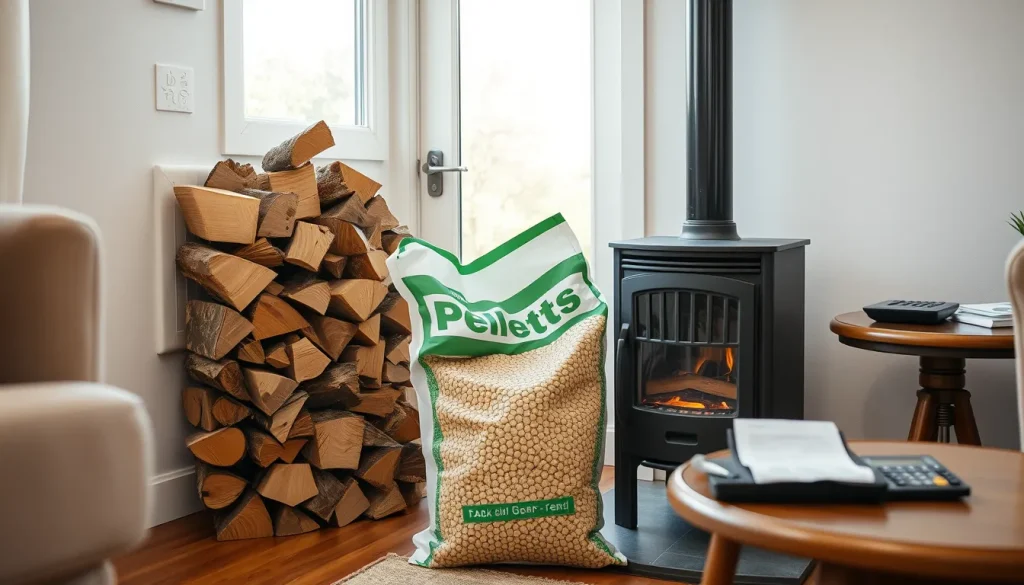
Biomass is not a single fuel. For a U.S. household, it can mean a cord of firewood, a bag of wood pellets, a biofuel blended into gasoline or diesel, or a share of the electricity supplied by the grid. Because those pathways use different equipment and have different emissions and management needs, the useful question is which biomass fuel is being used, for what service, and under what conditions.
What counts as biomass?
The U.S. Energy Information Administration defines biomass as renewable organic material that comes from plants and animals. It can be burned directly for heat or converted to liquid and gaseous fuels. In 2025, biomass accounted for about 5% of total U.S. primary energy consumption, according to the EIA.
Biomass feedstocks are broader than firewood. The EIA lists wood and wood-processing waste, including firewood, wood pellets, wood chips, sawdust, and black liquor from pulp and paper mills. It also lists agricultural crops and waste, such as corn, soybeans, sugarcane, switchgrass, woody plants, algae, and crop and food-processing residues. A third category is biogenic material in municipal solid waste, such as paper, cotton and wool products, food, yard waste, and wood.
That range matters because the word biomass does not tell you whether the fuel is a log, a liquid transportation fuel, or a gaseous fuel made from organic material. It also does not tell you whether the feedstock was grown, harvested, and processed sustainably.
The main biomass fuel groups
Solid biomass
Solid biomass is the group most households encounter directly. It includes firewood, wood pellets, wood chips, charcoal, and agricultural residues. The EIA notes that wood and charcoal are major cooking fuels, and Stanford University’s Understand Energy Learning Hub describes traditional biomass as wood, peat, or animal waste gathered and burned for cooking and heating. Traditional biomass is easy to store but has low energy density and can generate severe indoor air pollution.
For homes, the visible equipment is usually a wood stove, pellet stove, fireplace, or fireplace insert. The EIA says modern wood-burning stoves, pellet stoves, and fireplace inserts can reduce particulate emissions compared with older or open burning. They do not eliminate emissions, and installation and venting are safety matters for qualified professionals and local codes.
Liquid and gaseous fuels
Biomass can also be processed into liquid biofuels and biogas. Stanford describes liquid biofuels and biogas as energy carriers that are easier to use, transport, and store than raw solid biomass. The EIA notes that crops such as corn, soybeans, and sugarcane are used mostly to produce biofuels. These fuels are mainly associated with transportation, though biogas is also an energy carrier.
This distinction is useful for bill payers: a household may never buy a bag of biomass and still be connected to biomass energy through the electricity grid or through liquid fuel used for transport. A typical electricity bill reports kilowatt-hours (kWh) and charges, not the fuel source behind each kWh; the generation mix depends on the utility and the plan.
How biomass becomes useful energy
Biomass stores chemical energy originally captured from the sun. Plants absorb sunlight through photosynthesis and convert carbon dioxide and water into carbohydrates. That stored energy can then be used through direct or indirect pathways.
In the direct pathway, biomass is burned to create heat for a room, cooking, or industrial process, or burned in a power plant to generate electricity. In the indirect pathway, biomass is processed into a liquid or gaseous fuel that can be stored and used later. National Geographic Education describes the same basic sequence: biomass contains solar energy, and that energy can be transformed into heat, electricity, or biofuel.
For a household, the direct pathway is the one with the clearest cost and air-quality implications, because the appliance is on site and the fuel is purchased and stored at home. The indirect pathway is mostly invisible at the household level; it shows up in transportation fuel or in the electricity mix rather than as a line item on a home heating bill.
Household uses and what shows up on a bill
Biomass serves three main energy uses: heat, electricity, and transportation fuel. The EIA also notes that biomass is used for heating and electricity generation and as a transportation fuel, and that it is especially important in developing countries for cooking and heating.
- Heating and cooking. A household that burns firewood, pellets, or charcoal buys the fuel directly and uses an on-site appliance. The relevant questions are fuel price, appliance efficiency, venting, maintenance, and local air-quality rules.
- Electricity. Biomass can be burned to generate electricity. For a bill payer, the practical unit is still the kWh on the bill; the biomass share is a property of the generation mix, not a separate charge on most residential bills.
- Transportation fuel. Liquid biofuels made from biomass can be used as transportation fuels. That use is part of national biomass consumption, but it is not usually a household energy-bill decision.
Renters usually have less control over direct biomass use than homeowners. A renter may be able to choose an electricity plan where the utility offers options, but leases, building rules, and local codes may restrict open burning, wood storage, or solid-fuel appliances. Anyone considering a biomass heating appliance should confirm whether the equipment is permitted, who will install and service it, and what ventilation and maintenance it requires.
Sustainability questions
Is biomass renewable?
Biomass can be renewable, but not automatically. Stanford’s energy learning hub calls biomass a semi-renewable resource because it must be carefully managed so that it is not used faster than it can be replenished. National Geographic Education makes a similar point: biomass can be a nonrenewable energy source when it is not sustainably managed.
The practical test is whether the feedstock is regrown, harvested, and processed at a rate that can be sustained. A woodlot that is thinned and replanted is a different case from a forest that is cleared without replacement. Because biomass covers many feedstocks, a general statement that biomass is renewable is less useful than a statement about a specific supply chain.
Is biomass carbon-neutral?
Burning biomass releases carbon dioxide, just as burning fossil fuels does. The EIA explains that the source plants for biomass capture almost as much carbon dioxide through photosynthesis as biomass releases when burned, which makes biomass a carbon-neutral energy source in that biogenic-carbon sense.
That does not mean every biomass pathway is automatically low-carbon. The environmental result depends on how quickly the feedstock regrows, how the land is managed, what energy is used to harvest and process the fuel, and how the accounting treats the timing of emissions and regrowth. The EIA’s carbon-neutral description is a useful starting point, but it should not be read as a guarantee for every cord, pellet bag, or electricity contract.
What about air quality and health?
Wood smoke is not harmless. The EIA states that wood smoke contains harmful pollutants such as carbon monoxide and particulate matter, and it notes that modern wood-burning stoves, pellet stoves, and fireplace inserts can reduce particulates released from burning wood. Stanford’s discussion of traditional biomass adds that indoor air pollution from low-efficiency biomass burning can be significant.
For a household, the air-quality question is closely tied to the appliance and how it is used. A modern, correctly installed and maintained appliance is not the same as open burning or an older stove. Anyone making a heating decision should compare emissions and efficiency, follow local rules, and use a qualified installer for solid-fuel equipment.
A practical way to compare biomass heat costs
Do not compare the price of a cord or a bag of pellets directly with the price of a kWh of electricity. You need the cost per unit of useful heat. Start with the fuel’s energy content, multiply by the appliance’s efficiency, and convert the useful heat to kWh. The U.S. household electricity price is not the only comparison point; the other heating fuel’s delivered cost and efficiency matter too.
useful heat (Btu) = fuel energy content (Btu) × appliance efficiencyuseful kWh = useful heat (Btu) ÷ 3,412 Btu per kWhcost per useful kWh = fuel cost ÷ useful kWh
Illustrative example only: assume a fuel package contains 8,000,000 Btu and the appliance delivers 70% of that energy as useful heat. Useful heat is 8,000,000 × 0.70 = 5,600,000 Btu. Divide by 3,412 Btu per kWh to get about 1,641 kWh of useful heat. If the package costs $240, the modeled fuel cost is $240 ÷ 1,641 kWh = about $0.15 per useful kWh. That figure excludes installation, venting, maintenance, delivery, storage, and ash disposal, and it is not a current price quote.
A complete comparison should use a full heating season, not a single cold week. Appliance efficiency varies with fuel moisture and operation, and a household may heat only part of a home with biomass. Measure current fuel use or collect at least a full season of bills before estimating savings.
Common mistakes to avoid
- Assuming all biomass is automatically carbon-neutral. The carbon benefit depends on the feedstock, regrowth, harvest, processing, and accounting. Treat carbon-neutrality as a pathway question, not a label that applies to every biomass product.
- Treating wood smoke as harmless. Wood smoke contains carbon monoxide and particulate matter. Modern appliances can reduce particulates, but they do not eliminate emissions or the need for proper venting and maintenance.
- Comparing fuel prices without efficiency. A cheaper bag of fuel can cost more per unit of useful heat if the appliance is inefficient or the fuel has low energy content. Compare cost per useful kWh over a full season.
- Ignoring tenancy and local rules. Renters, condominium owners, and homeowners may face lease terms, building rules, or local air-quality restrictions that affect whether a biomass appliance can be used at all.
What to check before choosing a biomass option
- Identify the service you are actually buying: room heat, central heat, electricity, or transportation fuel. The decision criteria are different for each.
- For direct biomass heat, confirm that the appliance is allowed, get the installed cost and efficiency, and ask a qualified professional about venting, clearances, and maintenance.
- Compare cost per useful kWh over a full season, including fuel, delivery, maintenance, and any equipment or chimney work.
- For grid electricity, ask your utility or plan provider how the generation mix is calculated; do not assume that a biomass share appears as a separate bill line.
The best next step is to measure your current energy use and collect fuel prices, appliance efficiency, and installation quotes before comparing options. That turns a broad question about biomass into a household-specific decision about cost, emissions, and practical fit.
FAQ
Is biomass energy renewable?
It can be, but not automatically. Stanford calls it semi-renewable because it must be managed so use does not outpace replenishment; National Geographic notes it can be nonrenewable when not sustainably managed.
Does burning biomass release carbon dioxide?
Yes. The EIA notes that biomass and fossil fuels both release carbon dioxide when burned; the biogenic-carbon case depends on plants capturing carbon through photosynthesis and on how the feedstock is managed.
Is wood smoke a health concern?
Yes. The EIA says wood smoke contains harmful pollutants including carbon monoxide and particulate matter. Modern stoves and inserts can reduce particulates, but proper installation, venting, and maintenance remain important.
Can renters use biomass energy?
Renters may have limited direct options because leases and building rules can restrict solid-fuel appliances and storage. They may still be connected to biomass through grid electricity or transportation fuel, but should check plan details and property rules.
Follow the evidence
Sources & references
- U.S. Energy Information Administration. Biomass explained. https://www.eia.gov/energyexplained/biomass/ (2025 U.S. biomass share and feedstock and use descriptions; accessed November 5, 2026).
- U.S. Energy Information Administration. Biomass and the environment. https://www.eia.gov/energyexplained/biomass/biomass-and-the-environment.php (biogenic carbon dioxide and wood-smoke pollutants; accessed November 5, 2026).
- Stanford University, Understand Energy Learning Hub. Biomass. https://understand-energy.stanford.edu/energy-resources/renewable-energy/biomass (semi-renewable status, energy carriers, traditional biomass, and indoor air pollution; accessed November 5, 2026).
- National Geographic Education. Biomass Energy. https://education.nationalgeographic.org/resource/biomass-energy/ (photosynthesis, feedstocks, and management-dependent renewability; accessed November 5, 2026).
Useful terms in this guide
- Biomass feedstock
- Organic material such as wood, crops, or biogenic waste used to produce biomass energy.
- Biofuel
- A liquid or gaseous fuel made from biomass, often used as a transportation fuel.
- Traditional biomass
- Wood, peat, or animal waste gathered and burned for cooking or heating, typically with low energy density and high indoor air pollution risk.
- Carbon-neutral
- In biomass discussions, the idea that plants capture roughly as much carbon dioxide as is released when the material is burned; the outcome depends on regrowth and management.
Have a question about these numbers?
Tell us what needs a closer look.