The quick answer
Electricity reaches a U.S. home through a chain that starts at a power plant, moves across high-voltage transmission lines, passes through local distribution wires and a meter, and ends at the home electrical panel. Your bill usually combines usage charges for energy, delivery charges for wires and services, and fixed or regulatory charges, but the exact labels and available suppliers depend on where you live. Understanding the chain helps you separate what you can control, such as usage and timing, from what you cannot, such as transmission costs and weather.
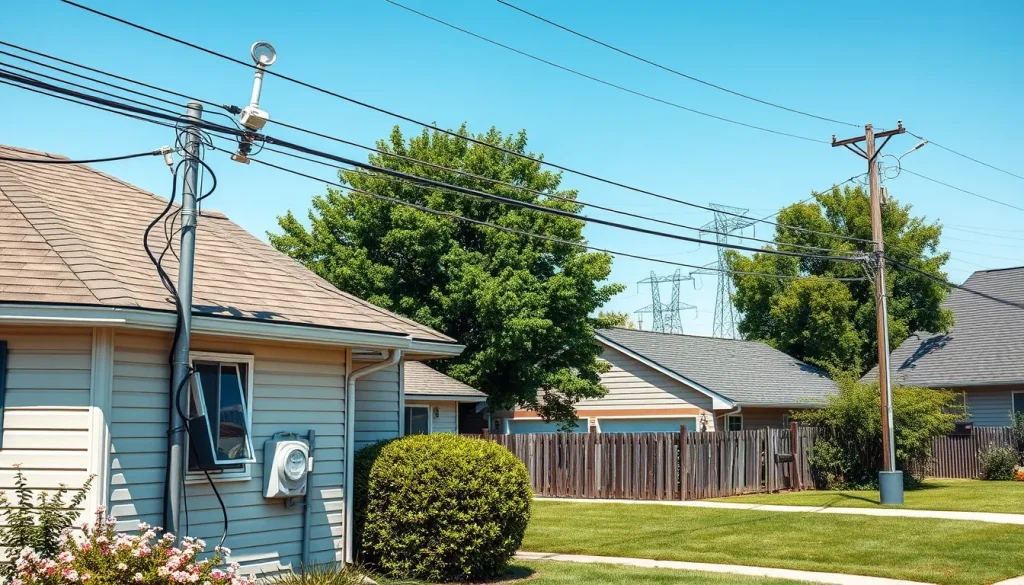
When you flip a light switch, you are not tapping a private stockpile of electricity. You are closing a circuit inside a system that must balance generation and demand continuously, often across a region much larger than your neighborhood. The U.S. grid includes substations, transformers, and power lines that connect producers and consumers; most local grids are interconnected into larger networks, and the national system links thousands of power plants to hundreds of millions of customers (U.S. Energy Information Administration, Delivery to consumers).
That physical system is only half of the story. The other half is the bill: a set of prices and charges that translates metered energy use into a monthly amount. This guide follows electricity from generation to the service panel, explains the terms on a U.S. household bill, and shows a transparent way to estimate what an appliance costs to run. It does not quote your utility or predict your next bill. Rates, fees, market rules, and available suppliers vary by state and utility, and the numerical examples below are explicitly illustrative.
The path at a glance: from generator to branch circuit
The simplest way to picture the journey is as a chain with four practical stages: generation, transmission, distribution, and use inside the home. Generation produces electricity at a power plant. Transformers raise the voltage for transmission, which moves bulk power over high-voltage lines. A substation lowers the voltage for local distribution. Distribution lines on poles or underground cables carry power to a service drop, through a meter, and into the home electrical panel, where branch circuits feed lights, outlets, and appliances.
The grid is not a single wire from one plant to one house. It is a network with many possible paths. The U.S. grid is made up of thousands of miles of high-voltage power lines and millions of miles of low-voltage power lines, connecting thousands of power plants to hundreds of millions of electricity customers (EIA, Delivery to consumers). Most local grids are also interconnected, which helps the system remain reliable and share supply across areas.
Your bill is not a map of those electrons. Electricity is difficult to label and store at household scale, so the bill is better read as a set of service and commodity charges. The way electricity is sold varies by region: some utilities generate all the electricity they sell, while others buy power from other utilities, power marketers, independent power producers, or wholesale markets (EIA, Delivery to consumers). That regional difference explains why two households with similar usage can see different bill formats and different choices about who supplies their energy.
Essential concepts: power, energy, voltage, and the bill
Power and energy are not the same thing
Power is the rate at which energy is used or delivered. It is measured in watts (W) or kilowatts (kW), where 1 kW equals 1,000 W. Energy is the amount used over time. Electricity bills normally measure energy in kilowatt-hours (kWh). The relationship is:
energy in kWh = power in kW × time in hours
A 100 W light bulb running for 10 hours uses 1 kWh because 100 W is 0.1 kW, and 0.1 kW × 10 hours = 1 kWh. A 1,500 W portable heater running at full power for one hour uses 1.5 kWh. This distinction matters because appliances are often labeled by maximum power, while the bill is based on energy accumulated over a billing period.
Voltage, frequency, and transformers
Voltage is roughly the electrical push that moves current through a circuit. Transformers change voltage levels: they step voltage up for long-distance transmission and step it down for local distribution and household use. The U.S. Department of Energy notes that the United States uses 110–120 V at 60 Hz, while many other countries use 220–240 V at 50 Hz (U.S. Department of Energy, Electricity 101). That is why plugs, appliances, and travel adapters are not universally interchangeable.
Higher transmission voltage allows the same amount of power to move with less current, which generally reduces line losses over long distances. That is a simplified explanation, but it captures the reason the grid uses a hierarchy of voltages rather than one household-level voltage everywhere.
Supply, delivery, fixed charges, and riders
A household bill may use different labels, but most charges fall into a few categories. A supply or energy charge pays for the electricity itself, meaning generation and sometimes related procurement. A delivery charge pays for moving power over transmission and distribution wires and for metering, billing, and customer service. A fixed customer charge is a set amount per month that does not depend on kWh. Taxes and regulatory riders may be added by state or local rules, and some tariffs include demand charges or time-varying prices.
Delivery is not a trivial add-on. Distribution poles and underground cable systems carry electricity right to the home, and the delivery portion of a bill covers the system and people that keep that service available (Eversource, How Electricity Gets to Your Home). In a state with competitive supply, you may choose an energy supplier, but the wires are still operated by the local utility. In a vertically integrated state, the utility may provide both supply and delivery under one tariff.
A tariff is the rulebook behind the bill
A tariff, sometimes called a rate schedule, is the utility or regulator’s set of prices and rules for a customer class. It defines the customer charge, energy charges, delivery charges, riders, minimum bills, payment rules, and any time-of-use or demand provisions. Two bills with the same kWh total can differ because they sit on different tariffs, cover different billing periods, or include credits and arrears. When a bill seems surprising, the tariff and the meter reading are more useful than a general national average.
Stage 1: Generation — where electricity is made
Generation is the first stage in the journey. A power plant converts an energy source into electrical energy using a generator. National Grid’s explanation of the electricity journey divides generation sources into renewable and nonrenewable categories: wind, solar, hydropower, and bioenergy on the renewable side; coal, other fossil fuels, and nuclear power on the nonrenewable side (National Grid, Where does electricity come from?). That is a general categorization, not a statement about any particular U.S. region’s fuel mix. The actual mix varies by location and hour as plants are dispatched.
Most large generators produce alternating current, or AC. AC can be transformed between voltage levels, which is one reason it became the standard for grid delivery. The generator’s output is synchronized to the grid’s frequency. In the United States, that frequency is 60 Hz (DOE, Electricity 101).
Why generation must follow demand
Electricity is consumed almost as it is produced. Large-scale storage exists, but the grid cannot simply fill a warehouse with electrons and draw down the pile later. System operators and utilities schedule generation to match demand, keep reserves available, and respond to changes in load. When demand rises sharply or a plant or line fails, the system must find another source or reduce load. This is why weather, outages, and grid conditions can affect prices and reliability even when your own wiring is fine.
A single household does not control dispatch, but it can control the timing and amount of some usage. That becomes relevant when a tariff prices energy differently by hour or when a household is considering a time-of-use plan. It is less relevant on a flat-rate tariff, where the price per kWh does not change with the clock, though the total bill still depends on how many kWh are used.
What choosing a supplier does and does not mean
In a restructured market, choosing an energy supplier generally changes who sells you the generation service and how that price is set, not who owns the local wires. The physical electrons still flow over the same grid. If you buy a product marketed as renewable, the claim usually involves contractual instruments or credits rather than physically tracing a specific electron from a wind farm to your outlet. That does not make the product meaningless, but it is a different question from whether the lights come on.
Stage 2: Transmission — moving bulk power
At the power plant, a step-up transformer raises voltage for transmission. High-voltage lines carry bulk power across regions to substations near cities and industrial areas. The transmission network is part of the grid that EIA describes as including substations, transformers, and power lines. It is the long-distance part of the system, although the boundary between transmission and local distribution is a regulatory and engineering distinction that can vary by region.
Transmission is not free, and it is not something a household can switch off. Its costs are generally recovered through regulated charges or tariffs, sometimes bundled into delivery and sometimes shown separately. Transmission constraints can affect wholesale prices and reliability, but a homeowner’s practical lever is usually electricity use and timing, not the construction of a new line.
Substations switch and transform
Substations are nodes where lines connect, switching equipment isolates sections, and transformers change voltage. A transmission substation may connect high-voltage lines to one another or lower voltage for a distribution substation. These facilities are utility infrastructure, not consumer equipment. They are fenced and marked for good reason: the voltages and fault currents are dangerous, and work there requires utility authorization.
Losses and congestion are normal grid facts
Some energy is lost as heat when power moves through wires and transformers. Line losses are one reason the amount generated is slightly higher than the amount metered at homes. Congestion occurs when the network cannot carry all the power that would otherwise flow to a particular area at low cost. These are normal system conditions, not evidence of a problem in your home. They are among the reasons the wholesale price of electricity can change even when your own appliances have not changed.
Stage 3: Distribution — the wires on your street
Distribution is the local stage. Distribution lines, whether overhead on poles or underground in cables, carry electricity from substations to neighborhoods and individual buildings. A service drop connects the utility’s line to the building, and the meter measures the energy delivered. The delivery portion of a bill supports this local system, including maintenance and improvements that keep power available.
Distribution is also the part of the grid most visible to a household. Trees near lines, damaged poles, underground cable faults, and transformer failures can cause outages. The local utility or cooperative is the contact for restoration and for questions about service connections. In apartment buildings and some multi-unit properties, metering can be arranged differently; a master meter may serve the building, with submetering or rent-included electricity handled under local rules.
The meter and the service panel
The meter records energy delivered over time. Older electromechanical meters and newer electronic meters display or transmit kWh totals; an interval meter records usage in time blocks, which is useful for time-of-use rates. After the meter, power enters the service panel, where circuit breakers or fuses protect branch circuits. The panel is not a consumer maintenance item. Removing its cover exposes live parts and can be lethal. If you are adding a large load such as an electric vehicle charger, heat pump, or electric range, have a qualified electrician assess the service capacity and panel condition.
Outages and backup power
During an outage, the physical supply from the grid is interrupted. A portable generator can provide power to selected appliances, but it must be connected safely. Never plug a generator into a household outlet or connect it to home wiring without a proper transfer switch installed by a qualified professional. Backfeeding can endanger utility workers and damage equipment. Keep generators outdoors and away from windows and doors to avoid carbon monoxide hazards.
Stage 4: Inside the home — from panel to appliance
Inside the service panel, electricity is divided into branch circuits that feed receptacles, lighting, and fixed appliances. The voltage and current available at a receptacle depend on the circuit design and the appliance’s requirements. A lamp might draw less than 100 W; a microwave might draw over 1,000 W while running; a central air conditioner may draw several kilowatts while the compressor is on. These are power values at a moment in time, not monthly energy totals.
Many appliances cycle. A refrigerator’s compressor turns on and off. A heat pump modulates or cycles depending on the system and weather. An electric water heater cycles on a thermostat. A space heater may run continuously until the room reaches a set temperature, then cycle. Rated watts describe a maximum or nominal operating condition, not necessarily the average draw over a month. For a realistic estimate, use measured energy from a meter or smart plug when possible, or state a clear assumption about full-power hours and test it against your bill.
Why rated watts do not equal monthly kWh
The formula for a simple estimate is:
monthly kWh = watts ÷ 1,000 × full-power hours per day × days in the period
If an appliance cycles, replace “full-power hours per day” with the equivalent hours at full power. For example, a device that runs at 50% average power for 4 hours uses about 2 full-power hours. If it has a variable-speed compressor, the relationship is smoother but still requires an average power assumption. The result is an energy estimate, not a complete bill, because it excludes fixed charges, taxes, and other appliances.
How your meter reading becomes a bill
Meter reading and billing period
A bill usually shows a previous read and a current read, or an estimate when a read was not obtained. The difference between the reads is the kWh used. The number of days in the billing period matters because a 34-day period will generally include more use than a 28-day period if behavior is unchanged. When comparing two bills, compare the kWh per day and the weather, not just the dollar total. If a bill says “estimated,” the utility may true up the account later when an actual read is taken.
The major bill components
Exact labels vary, but a U.S. residential bill commonly includes some combination of the following:
- Energy or supply charge: a price per kWh for generation and related procurement. On a flat rate, it is the same for each kWh; on a time-of-use rate, it changes by period.
- Delivery or distribution charge: a charge for transmission, distribution, metering, and customer services. It may be a per-kWh charge, a fixed charge, or both.
- Customer or service charge: a fixed monthly amount, usually not affected by usage, that covers account and service costs.
- Riders and adjustments: regulator-approved charges for specific costs such as system improvements, energy-efficiency programs, or other policy items. Their names and amounts vary.
- Taxes and local fees: state and local taxes or fees imposed on electricity service.
- Demand charge: a charge based on the highest power drawn during a defined interval, measured in kW. Demand charges are more common on commercial and industrial accounts, but some residential tariffs or pilot plans include them. Check the tariff rather than assuming.
- Credits and adjustments: solar export credits, budget-billing balances, late fees, deposits, or prior balances may appear separately.
A simple estimate of appliance energy use is not a complete bill. It covers only the variable energy associated with that appliance, and only under the assumptions used. Fixed charges and taxes do not disappear when one appliance is turned off.
Effective rate versus marginal rate
The effective rate is the total bill divided by total kWh:
effective rate = total bill ÷ kWh used
The marginal rate is the cost of the next kWh. Fixed charges make the effective rate higher at low usage because the fixed amount is spread over fewer kWh. For deciding whether to run an extra appliance, the marginal variable rate is usually the better number. For comparing overall bill levels across households or months, the effective rate can be useful. Mixing the two can exaggerate or understate savings.
Tiers, time-of-use prices, and demand charges
A tiered tariff charges one price for usage up to a threshold and a different price above it. A time-of-use tariff charges different prices in defined periods, often reflecting higher system costs at peak times. A demand charge is based on peak power, not total energy, so a household could use relatively few kWh but still incur a high demand charge if several large loads run at once. These rate designs change the value of shifting or reducing usage. They do not change the basic physics: a kWh is still a quantity of energy.
A worked example: reading a 900 kWh monthly bill
The following example is illustrative. It uses invented rates to show the arithmetic, not a quote from any utility. Assume a 30-day billing period, 900 kWh used, a supply charge of $0.14 per kWh, a delivery charge of $0.06 per kWh, and a fixed customer charge of $12.00. For simplicity, exclude taxes, riders, demand charges, and credits. These exclusions matter; a real bill may include them.
| Bill component | Calculation | Amount |
|---|---|---|
| Supply or energy charge | 900 kWh × $0.14/kWh | $126.00 |
| Delivery charge | 900 kWh × $0.06/kWh | $54.00 |
| Fixed customer charge | Set monthly amount | $12.00 |
| Total before taxes and riders | $126.00 + $54.00 + $12.00 | $192.00 |
| Effective rate | $192.00 ÷ 900 kWh | $0.2133/kWh, or 21.3 cents/kWh |
| Marginal variable rate | $0.14/kWh + $0.06/kWh | $0.20/kWh, or 20 cents/kWh |
The total is $192.00 under the stated assumptions. The effective rate is about 21.3 cents per kWh. The marginal variable rate is 20 cents per kWh because the fixed $12 charge does not change when one more kWh is used. For an appliance estimate, use the marginal variable rate if the question is “what does an extra hour cost?” Use the effective rate only when you are describing the whole bill.
Now suppose a portable space heater is rated at 1,500 W and you assume it draws full rated power for 4 hours per day for 30 days. The energy estimate is:
1,500 W ÷ 1,000 = 1.5 kW1.5 kW × 4 hours/day = 6 kWh/day6 kWh/day × 30 days = 180 kWh180 kWh × $0.20/kWh = $36.00
The estimated variable cost is $36.00 for the month under those assumptions. If the heater cycles and averages only 2 full-power hours per day, the estimate falls to 90 kWh and $18.00. If it runs more, the estimate rises. Rated watts alone do not establish the average, so treat the result as a sensitivity test, not a promise. The heater also affects comfort and may change how often other heating equipment runs, which a single-appliance calculation does not capture.
Why the fixed charge matters at different usage levels
The same illustrative rates produce different effective rates at different monthly usage levels:
| Monthly use | Supply at $0.14/kWh | Delivery at $0.06/kWh | Fixed charge | Total before taxes and riders | Effective rate |
|---|---|---|---|---|---|
| 500 kWh | $70.00 | $30.00 | $12.00 | $112.00 | $0.224/kWh |
| 900 kWh | $126.00 | $54.00 | $12.00 | $192.00 | $0.213/kWh |
| 1,200 kWh | $168.00 | $72.00 | $12.00 | $252.00 | $0.210/kWh |
The table shows a consistent period and consistent service assumptions. It establishes that a fixed charge weighs more heavily on a low-usage bill. It does not establish what any reader should pay. Taxes, riders, tiers, time-of-use periods, and demand charges can change the result, and a different billing period changes the kWh denominator.
What changes the number: household, weather, and utility factors
Bills move for reasons that are partly inside the home and partly outside it. Separating those factors is the foundation of any useful bill investigation.
- Weather and season: Heating and cooling loads respond to outdoor temperature, humidity, wind, and solar gain. A mild month and a severe month are not comparable even if the household did nothing different.
- Occupancy and behavior: More people at home, more laundry, longer showers, and extra space heating all add energy. So can a new work-from-home schedule or a guest staying for a month.
- Building conditions: Insulation, air sealing, window performance, duct condition, and thermostat settings affect how much energy is needed for comfort. These are often bigger levers than changing light bulbs, though bulbs are cheaper and easier.
- Equipment efficiency and cycling: An older refrigerator, water heater, or air conditioner may use more energy for the same service. A variable-speed system may use less at part load, but rated power alone does not prove average performance.
- Rate design: Flat, tiered, time-of-use, and demand tariffs value the same kWh differently. A household that uses most power at peak times may see a different result from one that spreads usage across the day.
- Fixed charges and fees: Customer charges, minimum bills, late fees, deposits, and riders can make a low-usage bill look expensive per kWh. They are not evidence that the meter is wrong by themselves.
- Billing period and estimates: A long billing period or an estimated read can distort a month-to-month comparison. Check the dates, days, and read type.
- Market structure and regulation: Some states allow retail choice; others leave supply with the utility. Municipal utilities and cooperatives may follow different rules. Delivery service is generally still provided by the local wires utility.
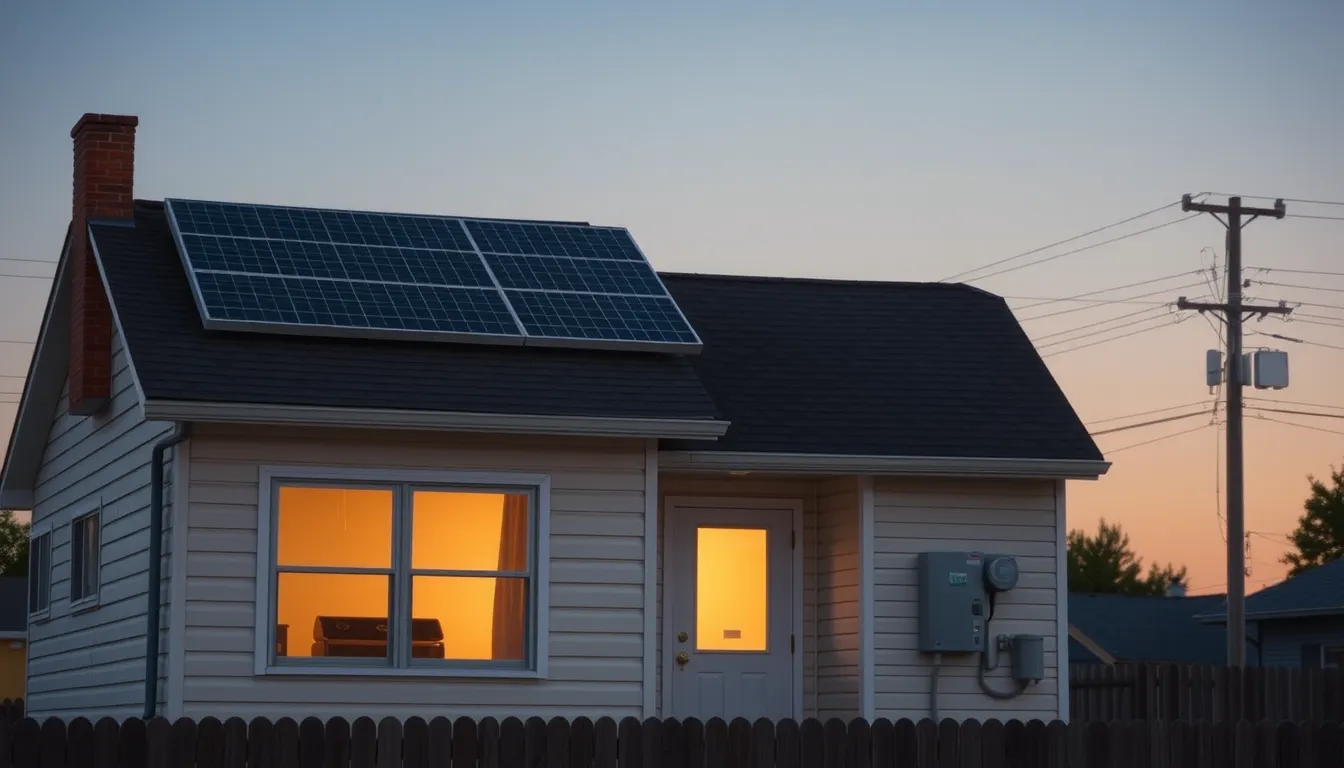
- Solar and other credits: A solar bill is not simply “generation minus usage.” Self-consumption, export compensation, fixed charges, and the timing of production all affect bill savings. Annual kWh produced does not by itself establish a dollar savings figure.
Regional differences are not just prices. They include the fuel mix, the age and capacity of the grid, the state’s regulatory model, whether competitive supply exists, and how utilities recover fixed costs. A comparison between two states can be interesting, but it is not a benchmark for whether your own bill is correct.
Common mistakes that make electric bills confusing
- Treating kW and kWh as interchangeable. A 1,000 W device is a 1 kW load; run it for one hour and it uses 1 kWh. The bill charges for kWh, not for the label on the appliance.
- Using the effective rate for every decision. Fixed charges are already sunk for the month. The marginal variable rate is usually more relevant for an extra load, while the effective rate is a summary of the whole bill.
- Ignoring delivery charges. The generation rate is only one line on many bills. Delivery, fixed charges, and riders can be a large share of the total.
- Assuming every kWh has the same price. Tiers and time-of-use periods can make the next kWh cost more or less than the average.
- Assuming rated watts run continuously. Cycling, thermostats, and variable-speed operation mean the average draw can be far below the label.
- Comparing bills with different periods or weather. A 34-day summer bill is not directly comparable to a 28-day spring bill. Compare kWh per day and note the weather.
- Expecting a supplier change to change the wires. Retail choice may change the energy supplier, but the local utility still delivers power and responds to outages in most restructured arrangements.
- Overlooking estimated reads and true-ups. An estimated bill can be followed by a catch-up bill when the meter is actually read.
How to check your own bill and estimate a next step
A practical review starts with the bill itself, then moves to one appliance or rate question. The goal is not to explain every dollar; it is to find the few numbers that answer the reader’s actual question.
- Identify the billing period and read type. Write down the start date, end date, number of days, previous read, current read, and total kWh. Note whether the current read is actual or estimated.
- Separate fixed from variable charges. List the customer charge, any demand charge, and any minimum bill separately from per-kWh energy and delivery charges.
- List every rate and rider. Include supply, delivery, taxes, and adjustments. If a rate changes by tier or time, write down the thresholds and periods.
- Calculate the effective rate. Divide the total bill by kWh. Then calculate the marginal variable rate for the next kWh. Use the marginal rate for appliance estimates and the effective rate for whole-bill comparisons.
- Check for one-time items. Look for late fees, deposits, prior balances, budget-billing adjustments, solar credits, or a true-up after an estimated read. These can dominate a month-to-month change.
- Compare like with like. Compare kWh per day with a similar weather period, not just the dollar total. If you have heating or cooling degree-day data, use it as context rather than proof.
- Estimate one appliance. Use measured energy if available; otherwise use the formula with an explicit full-power-hours assumption. Show the arithmetic and test a high and low assumption.
- Before changing a rate or supplier, compare the all-in offer. Read the contract summary, term, cancellation fee, introductory conditions, and how the price compares with the utility’s default service. Check the state regulator or utility for consumer protections and complaints.
- Know when to call a professional. Panel upgrades, new circuits, generator transfer switches, and repairs to fixed wiring are not do-it-yourself tasks. Insulation and HVAC upgrades may warrant a home energy assessment and multiple quotes. Simple checks such as reading the meter, air-sealing a draft, or using a smart plug are lower-risk first steps.
If the bill is high and usage is also high, the next step is usually an end-use investigation: heating, cooling, water heating, refrigeration, and large plug loads are common places to look. If usage is low but the bill is still high, fixed charges, fees, taxes, or a short billing period may be the explanation. If the meter or a read looks impossible, contact the utility and ask for an explanation before assuming either a meter fault or a billing error. Utilities can test meters and correct reads, but the process varies by jurisdiction.
A sensible closing action is to pick one number from the bill and one appliance. Calculate the appliance’s estimated monthly kWh and variable cost, then compare that estimate with the bill’s total kWh. If the estimate is a small fraction of usage, the biggest savings are probably elsewhere. If the estimate is large, test a lower-use assumption before spending money on a replacement. That simple discipline turns a confusing bill into a set of answerable questions.
FAQ
Does the electricity in my home physically come from the supplier I choose?
Usually not in a traceable, one-to-one way. Electricity flows over a shared grid, and electrons are not labeled by source. Choosing a supplier or a renewable product generally changes the contract and the environmental attributes or credits, not the physical path of electrons to your meter.
Why is my bill higher than the cents-per-kWh rate I signed up for?
The advertised rate may cover only supply. Delivery charges, a fixed customer charge, taxes, riders, time-of-use pricing, demand charges, and the number of days in the billing period can all add to the total. Compare the all-in bill and the effective rate, not just the supply rate.
What does a delivery charge pay for?
Delivery generally pays for the transmission and distribution system, metering, billing, and customer service provided by the local wires utility. In a restructured state, you may choose the energy supplier but still receive delivery service from the utility.
Can I choose my electricity supplier?
It depends on the state and sometimes on the utility. Some states allow retail competition for supply; others leave supply with the utility. Municipal utilities and cooperatives may have different rules. Check your state regulator or utility for the options available at your address.
Is a 1,500 W space heater expensive to run?
It depends on how many hours it runs at full power and what you pay per kWh. At an illustrative variable rate of $0.20/kWh, 180 kWh would cost $36.00. If the heater cycles and averages half that full-power run time, the estimate would be about $18.00. Use your own rate and a realistic cycling assumption.
What is a demand charge?
A demand charge is based on the highest power drawn during a defined interval, measured in kW, rather than on total kWh. It is more common on commercial and industrial accounts, but some residential tariffs or pilot plans include one. Check the tariff before assuming your bill has or does not have a demand charge.
Follow the evidence
Sources & references
- U.S. Energy Information Administration. Delivery to consumers. https://www.eia.gov/energyexplained/electricity/delivery-to-consumers.php (retrieved November 5, 2026).
- National Grid. Where does electricity come from? The journey of electricity to your home. https://www.nationalgrid.com/stories/energy-explained/where-does-electricity-come-from (retrieved November 5, 2026).
- Eversource. How Electricity Gets to Your Home. https://www.eversource.com/residential/account-billing/manage-bill/about-your-bill/understanding-your-bill/electricity-delivery-steps-illustrated (retrieved November 5, 2026).
- U.S. Department of Energy. Electricity 101. https://www.energy.gov/oe/electricity-101 (retrieved November 5, 2026).
Useful terms in this guide
- Kilowatt (kW)
- A measure of power equal to 1,000 watts. It describes the rate at which electricity is used or delivered at a moment in time.
- Kilowatt-hour (kWh)
- A measure of energy equal to 1 kW of power used for 1 hour. Residential electricity bills normally charge for kWh.
- Transmission
- The high-voltage part of the grid that moves bulk electricity over long distances from generation to areas where it is used.
- Distribution
- The local wires, poles, cables, transformers, and equipment that carry electricity from a substation to homes and businesses.
- Tariff
- A utility or regulator’s set of rates and rules for a customer class, including fixed charges, energy prices, delivery charges, and any time-of-use or demand provisions.
Have a question about these numbers?
Tell us what needs a closer look.